-
What Is a Variable Vane Pump and How Does It Work?
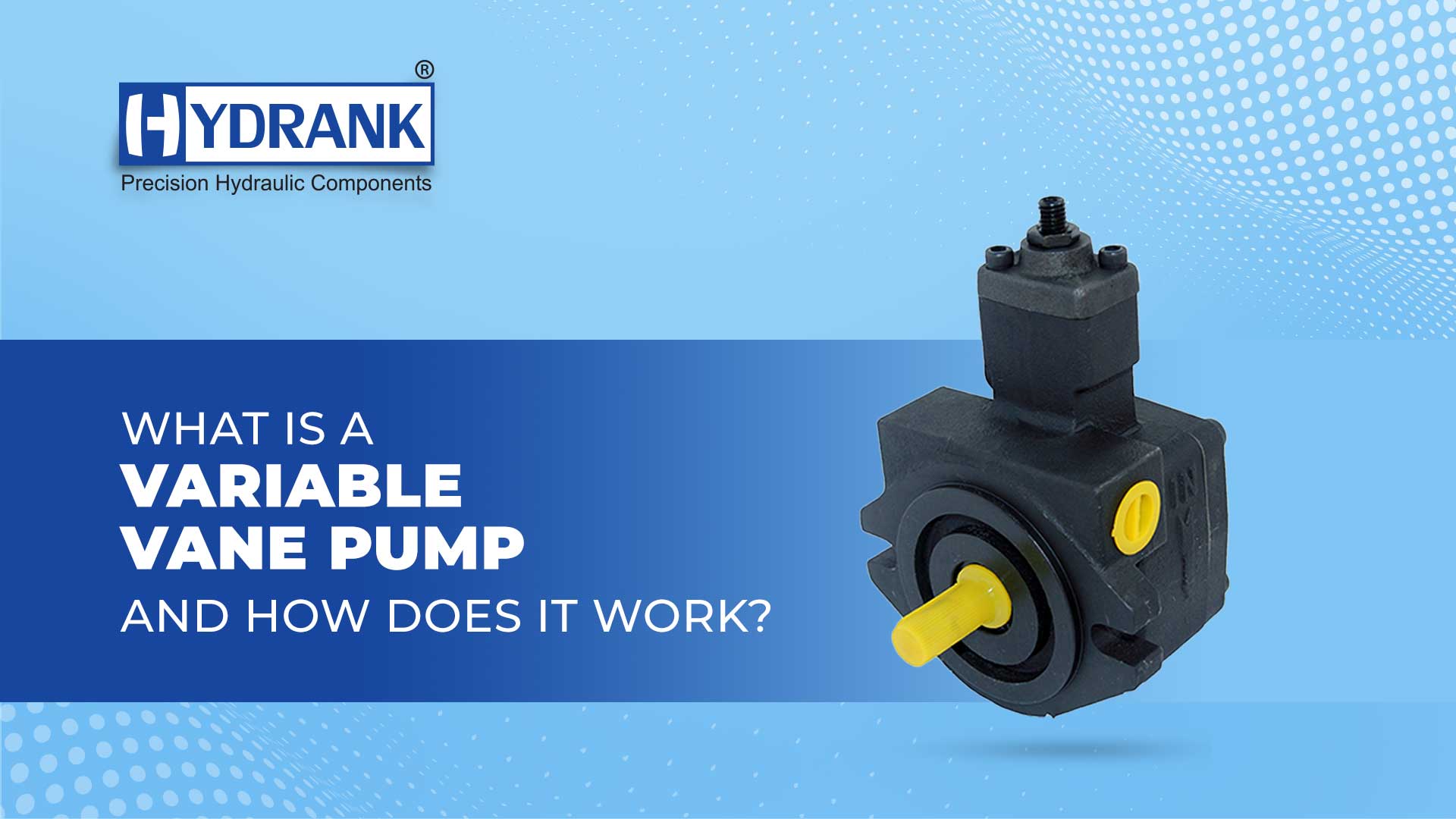
In hydraulic systems, efficiency is rarely achieved by constant output. Most industrial applications operate under varying loads, changing speeds, and fluctuating pressure demands. Supplying fixed flow under all conditions leads to energy loss, heat generation, and unnecessary component wear. This is where a variable vane pump becomes essential.
Unlike a fixed-displacement hydraulic vane pump, which delivers the same flow per revolution regardless of demand, a variable vane pump adjusts its displacement automatically. The result is improved energy efficiency, stable pressure control, and smoother system behavior under dynamic conditions.
Understanding how this mechanism works is critical for selecting the right pump in modern hydraulic applications.
What Is a Variable Vane Pump?
A variable vane pump is a type of positive-displacement hydraulic pump that can change its output flow while operating at constant speed. It achieves this by adjusting the eccentricity between the rotor and cam ring inside the pump housing.
In simpler terms, instead of delivering maximum flow at all times, the pump modifies its internal geometry to match system demand. This built-in adaptability allows precise flow control and consistent pressure control without external throttling losses.
Variable vane pumps are widely used in industrial machinery where load conditions change frequently, such as injection molding machines, machine tools, presses, and automation systems.
Basic Construction of a Hydraulic Vane Pump
To understand the variable mechanism, it helps to review the core structure of a hydraulic vane pump.
The main components include:
- Rotor mounted on the drive shaft
- Sliding vanes positioned in rotor slots
- Cam ring surrounding the rotor
- Side plates and housing to seal internal chambers
As the rotor turns, centrifugal force and hydraulic pressure push the vanes outward against the cam ring. The spaces between vanes expand and contract during rotation, creating suction at the inlet and discharge at the outlet.
In fixed pumps, the cam ring position is constant. In a variable vane pump, the cam ring can shift position.
How a Variable Vane Pump Works?
The defining feature of a variable vane pump is its movable cam ring.
1. High Flow Demand
When system pressure is low and flow demand is high, the cam ring maintains maximum eccentricity relative to the rotor. This creates larger pumping chambers, resulting in higher displacement and greater output flow.
2. Rising Pressure Condition
As system resistance increases, pressure builds. A hydraulic compensator mechanism senses this pressure and gradually shifts the cam ring toward a more concentric position.
3. Reduced Displacement
As eccentricity decreases, chamber volume reduces. Output flow drops automatically while maintaining the required pressure. If system demand continues to fall, the cam ring can move close to neutral, delivering minimal flow while holding pressure.
This self-adjusting mechanism ensures that the pump only delivers what the system requires. Instead of wasting energy through relief valves or throttling, the pump adapts internally.
Pressure Control Through Compensation
One of the key advantages of a variable vane pump is built-in pressure control.
The pump incorporates a pressure compensator that continuously monitors outlet pressure. When the preset pressure limit is reached, the compensator reduces displacement automatically.
This means:
- The pump does not overload the system
- Heat generation is minimized
- Energy consumption decreases
- System stability improves
Unlike systems that rely heavily on external relief valves to dump excess flow, a pressure-compensated vane pump limits flow at the source.
Flow Control Without Energy Loss
Traditional flow control methods restrict output using throttling valves. While effective, this approach converts excess energy into heat.
A variable vane pump achieves flow control differently. By reducing displacement internally, it avoids producing unnecessary flow in the first place. This significantly improves overall hydraulic efficiency.
The result is:
- Lower oil temperature
- Reduced wear on components
- Extended service life
- Lower power consumption
In high-duty industrial environments, this efficiency difference becomes substantial over time.
Advantages Over Fixed Displacement Pumps
While fixed hydraulic vane pumps are reliable and cost-effective, they operate at full displacement continuously. In systems with fluctuating loads, this leads to inefficiencies.
Variable vane pumps offer:
- Automatic adaptation to load changes
- Stable actuator speed under varying pressure
- Reduced noise due to balanced operation
- Improved energy efficiency
- Lower operating temperatures
These benefits make them particularly suitable for precision-controlled industrial applications.
Applications in Industrial Systems
Variable vane pumps are widely used in:
- Plastic injection molding machines
- CNC and machine tools
- Hydraulic presses
- Die casting equipment
- Automation systems require smooth motion
Design and Engineering Considerations
When selecting a variable vane pump, key parameters include:
- Maximum operating pressure
- Flow capacity range
- Response time of compensator
- Fluid compatibility
- Operating temperature
Proper integration into the hydraulic circuit ensures optimal performance and long-term reliability.
At Shriank, variable vane pumps are engineered with precision-machined cam rings, durable vane materials, and stable compensator systems. This ensures accurate pressure response, smooth flow adjustment, and dependable operation across demanding industrial environments.
Conclusion
A variable vane pump is designed to match output to system demand. By adjusting internal displacement automatically, it provides efficient pressure control and flow control without relying on energy-wasting throttling methods.
In modern industrial hydraulics, where efficiency and reliability are critical, variable vane pumps offer a balanced solution between performance and durability.
When properly selected and integrated, a hydraulic vane pump with variable displacement does more than move fluid it enhances system stability, reduces energy consumption, and supports long-term operational efficiency.
India's Largest Hydraulic Vane Pump Supplier
contact us: +91 98980 09148

Subscribe to E-Mail Newsletters and Alerts
 submit

Delivery
Prompt and accurate delivery

Client Servicing
Pro after-sales customer support

Quality assurance
Top quality standards

Export
More then 10 countries