-
Types of Hydraulic Direction Control Valves: A Complete Guide
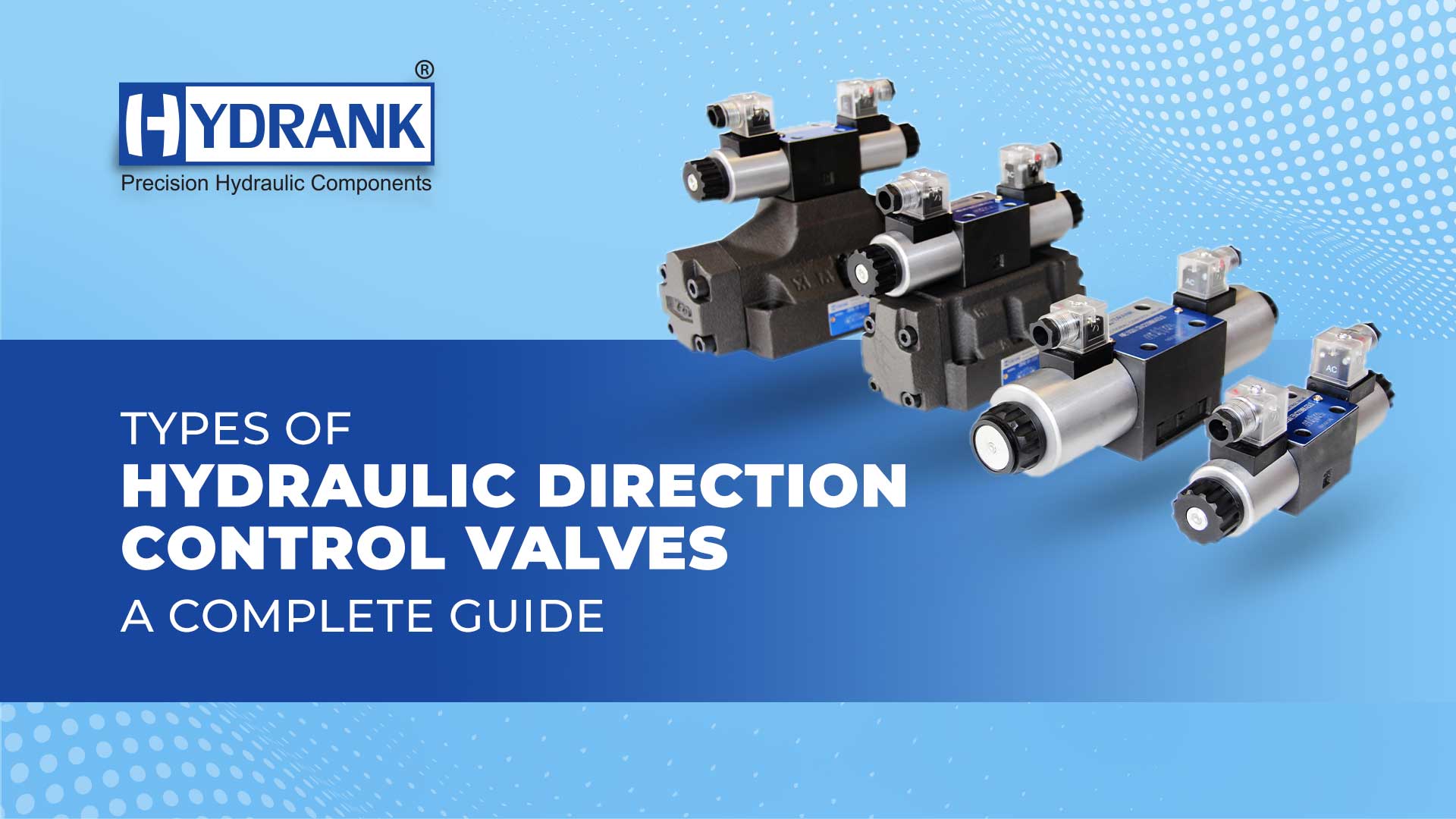
In industrial hydraulics, controlling pressure is essential, but controlling flow direction is what makes motion possible. Whether extending a cylinder, reversing a motor, or isolating a circuit, the hydraulic directional valve determines where the oil flows and how the actuators respond.
While directional valves may look similar externally, their internal configuration, actuation method, and port arrangement define how a hydraulic system behaves. Understanding the different types of directional control valves is critical to selecting the right component for performance, safety, and reliability.
This guide outlines the key valve types used in modern industrial hydraulics, along with their operating characteristics and application considerations.
What Is a Hydraulic Directional Valve?
A hydraulic directional valve is designed to route pressurized oil between the pump, actuator, and tank. By shifting internal passages, usually via a spool or poppet, the valve controls the flow path within a circuit.
In practical terms, it determines:
- Whether an actuator extends or retracts
- Whether a motor rotates clockwise or counterclockwise
- Whether a circuit is isolated or active
Directional valves do not regulate pressure or flow rate directly. Their primary function is managing flow direction within a hydraulic system.
Classification by Number of Ports and Positions
One of the most common ways to categorize directional control valves is by their port and position configuration. This is typically expressed in a format such as “4/3” or “4/2.”
Two-Way Valves (2/2 Valves)
A 2/2 valve has two ports and two positions open or closed. It is commonly used for simple on/off isolation in hydraulic circuits. While basic, it plays a vital role in fluid shutoff applications.
Three-Way Valves (3/2 Valves)
A 3/2 valve includes three ports and two positions. It is frequently used in single-acting cylinder applications, where oil must be directed to the actuator and then released back to the tank.
Four-Way Valves (4/2 and 4/3 Valves)
Four-way valves are the most common in industrial systems. They have four ports: pressure (P), tank (T), and two actuator ports (A and B).
- 4/2 valves provide two switching positions, typically used for basic extend/retract control.
- 4/3 valves include a third (center) position, which defines system behavior when the valve is not actuated.
The center configuration in a 4/3 valve is especially important, as it determines whether the actuator is locked, floating, or unloaded when in neutral.
Understanding Center Configurations in 4/3 Valves
The center position of a 4/3 hydraulic directional valve directly influences system stability and safety.
Closed Center
All ports are blocked in neutral. This locks the actuator in position and isolates pressure. Common in systems requiring load holding.
Open Center
All ports are connected in neutral. Pump flow returns to the tank at low pressure. Suitable for systems with fixed-displacement pumps.
Tandem Center
The pressure port connects to the tank, while the actuator ports are blocked. This unloads the pump while holding the actuator position.
Float Center
Actuator ports connect to the tank. This allows free movement of the actuator, often used in mobile applications.
Choosing the correct center type is not a minor decision; it determines how the system behaves when idle.
Classification by Actuation Method
Directional valves are also categorized by how the spool is shifted.
Manual Actuation
Operated by lever or push button. Suitable for low-frequency control or maintenance applications.
Mechanical Actuation
Triggered by cams, rollers, or linkages. Often used in automated machinery where movement is synchronized mechanically.
Solenoid-Operated Valves
Electrically actuated and widely used in automated systems. These allow integration with PLCs and remote control systems.
Pilot-Operated Valves
Used for larger flow rates. A small pilot valve shifts a larger main spool. This configuration is common in heavy-duty industrial hydraulics applications.
Each actuation method influences response time, force capacity, and integration capability.
Spool vs Poppet Directional Valves
Most industrial directional control valve types use spool construction. However, poppet valves are also used in certain systems.
Spool Valves
- Smooth shifting
- Suitable for high flow rates
- Slight internal leakage is possible
Poppet Valves
- Excellent sealing
- Minimal leakage
- More abrupt switching
Spool valves dominate in industrial systems due to their durability and smooth operation, but poppet designs are preferred where leakage must be minimized.
Applications in Industrial Hydraulics
Directional valves are fundamental across nearly every hydraulic application:
- Press machines – controlling ram extension and retraction
- Injection molding machines – managing clamp and injection movement
- Material handling equipment – controlling lifting and tilting functions
- Construction machinery – directing motor rotation and actuator motion
- Agricultural systems – operating implements and attachments
In each case, selecting the correct valve type ensures reliable motion control and operational stability.
Selection Considerations
Choosing the right hydraulic directional valve requires evaluating:
- Operating pressure range
- Maximum flow capacity
- Actuator type (single or double acting)
- Required center configuration
- Response speed
- Environmental conditions
Incorrect valve selection can lead to pressure drops, slow response, overheating, or unstable actuator behavior.
Why Valve Quality Matters?
In high-duty systems, valve performance directly impacts reliability. Poor machining tolerances, improper spool fit, or inadequate sealing can cause internal leakage, pressure instability, and premature wear.
At Shriank, directional control valves are engineered for durability, consistent spool movement, and reliable flow routing under demanding industrial conditions. Proper material selection and precision manufacturing ensure stable performance across varied applications.
Conclusion
Directional control valves are the switching mechanisms that enable hydraulic motion. From simple 2/2 isolation valves to complex 4/3 pilot-operated configurations, each design serves a distinct purpose in managing flow direction within a hydraulic circuit.
Understanding the different types of directional control valves allows engineers to design systems that operate predictably, safely, and efficiently. In modern industrial hydraulics, selecting the right valve is not simply about port count; it’s about matching performance characteristics to real operating conditions.
When properly selected and integrated, a hydraulic directional valve becomes more than a component; it becomes the foundation of control for the entire hydraulic system.
India's Largest Hydraulic Vane Pump Supplier
contact us: +91 98980 09148

Subscribe to E-Mail Newsletters and Alerts
 submit

Delivery
Prompt and accurate delivery

Client Servicing
Pro after-sales customer support

Quality assurance
Top quality standards

Export
More then 10 countries