-
What is a Voith Internal Gear Pump and How Does It Work?
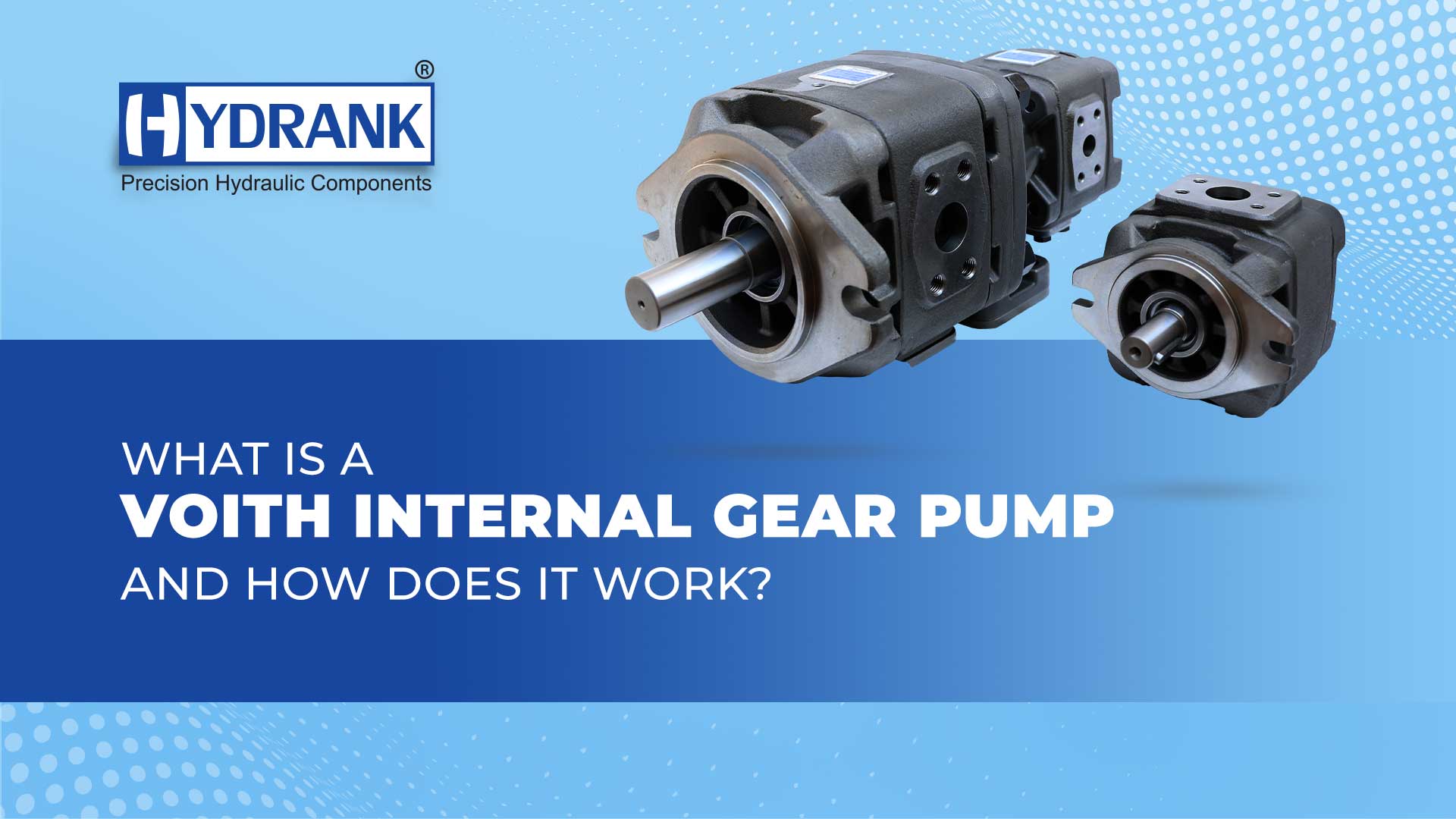
In hydraulic systems, smooth flow and pressure stability are often more important than maximum speed or peak output. This is especially true in industrial machinery operating under continuous load, where fluctuations in pressure can affect precision, efficiency, and component life. That is why the Voith Internal Gear Pump is widely used in applications requiring stable hydraulic performance and long operating life.
Unlike conventional gear pumps that can produce flow pulsation and noise at higher loads, internal gear pumps are designed for smoother fluid movement and better efficiency under varying operating conditions. Understanding how these pumps work helps explain why they are commonly used in heavy-duty hydraulic systems across industries.
Understanding the Basic Design of a Voith Internal Gear Pump
A Voith Internal Gear Pump operates using two gears positioned inside one another:
- An inner drive gear connected to the shaft
- An outer internally toothed gear
Both gears rotate in the same direction, but because they are offset eccentrically, spaces between the teeth continuously expand and contract during rotation.
As these chambers expand, hydraulic oil is drawn into the pump. As they contract, the oil is pushed toward the outlet under pressure. A crescent-shaped separator between the gears helps maintain sealing between the suction and pressure sides.
This design creates a continuous and controlled flow of oil with minimal pulsation.
How the Pump Actually Works in Operation
The working principle of an internal gear pump is relatively straightforward, but its efficiency comes from precision engineering.
1. Oil Enters Through the Suction Port
As the gears rotate, cavities between the teeth begin to open near the inlet side. This creates low pressure, allowing hydraulic oil to enter the pump naturally.
2. Fluid Moves Around the Gear Set
The oil becomes trapped between the gear teeth and the housing walls. Instead of passing directly through the center, the fluid moves smoothly around the outer circumference of the gear assembly.
3. Oil Is Pressurized at the Outlet
As the gears continue rotating, the cavities become smaller near the discharge side. The trapped fluid is compressed and forced out through the outlet port at high pressure.
Because this movement is gradual and continuous, the pump delivers stable flow with significantly lower pressure ripple compared to many external gear pump designs.
Why Internal Gear Pumps Are Preferred in Industrial Hydraulics
The biggest advantage of a hydraulic internal gear pump is operating stability. In systems where consistent pressure and low noise are important, internal gear pumps perform more efficiently than many conventional alternatives.
Some of the major benefits of internal gear pumps include:
Smooth and Low-Pulsation Flow
Internal gear pumps deliver nearly continuous flow, reducing vibration in hydraulic circuits. This improves actuator control and minimizes pressure fluctuations.
Lower Noise Levels
The gradual engagement of gear teeth reduces mechanical noise. This makes the pump suitable for indoor industrial environments and precision machinery.
High Efficiency Across Different Speeds
These pumps maintain strong volumetric efficiency even at lower operating speeds, which is important in variable-load systems.
Better Performance with Viscous Fluids
Internal gear pumps can handle a wider viscosity range compared to many external gear designs, making them suitable for different hydraulic oils and industrial fluids.
Hydraulic Internal Gear Pump Applications
The stable flow characteristics of internal gear pumps make them suitable for demanding industrial systems where pressure consistency matters.
Common hydraulic internal gear pump applications include:
- Injection molding machines
- Hydraulic presses
- Machine tools
- Steel and rolling mills
- Marine hydraulic systems
- Mobile construction equipment
- Industrial power units
In these applications, sudden pressure variation can affect machine accuracy and component life. Internal gear pumps help maintain smoother system behavior under changing loads.
Why Pressure Stability Matters in Hydraulic Systems
Many hydraulic systems experience fluctuating demand during operation. Cylinders accelerate and stop. Loads vary continuously. Directional valves shift under pressure.
A standard pump may respond with pressure spikes or unstable flow. A Voith Internal Gear Pump minimizes these fluctuations because of its internal geometry and continuous displacement pattern.
This improves:
- System responsiveness
- Pressure consistency
- Component life
- Energy efficiency
In heavy-duty applications, stable pressure is not only about performance—it directly affects reliability and maintenance cost.
Common Causes of Internal Gear Pump Failure
Even high-quality pumps can fail if operating conditions are ignored.
Typical causes include:
- Contaminated hydraulic oil
- Incorrect suction conditions
- Running the pump dry during startup
- Excessive pressure settings
- Improper alignment during installation
Most internal gear pump failures are not caused by manufacturing defects but by installation or maintenance issues.
Proper filtration, pressure control, and oil quality are essential for long-term performance.
Choosing the Right Voith Pump Replacement Supplier
When replacing a pump, compatibility is critical. The replacement unit must match:
- Pressure rating
- Flow capacity
- Mounting dimensions
- Shaft configuration
- Port arrangement
An experienced Voith pump replacement supplier understands these technical requirements and evaluates the application before recommending a replacement.
Choosing a replacement based only on part number or physical size often leads to efficiency loss or premature wear.
Why Businesses Work with Shriank
At Shriank, internal gear pump solutions are selected based on actual operating conditions, not generic catalog recommendations. Every application is evaluated for:
- System pressure
- Duty cycle
- Oil viscosity
- Operating environment
- Performance expectations
As a trusted Voith hydraulic pump distributor in India, Shriank supports industries with reliable pump solutions designed for long-term operation under demanding conditions.
The focus is not simply on supplying pumps, but on ensuring stable hydraulic performance, lower downtime, and consistent system reliability.
Conclusion
A Voith Internal Gear Pump is designed to deliver smooth flow, stable pressure, and reliable performance in demanding hydraulic systems. Its internal gear arrangement reduces pulsation, lowers noise, and improves efficiency across varying operating conditions.
From industrial presses to mobile hydraulic systems, these pumps are widely used where consistent hydraulic performance matters most.
With the right support from an experienced supplier like Shriank, internal gear pump systems can operate efficiently, safely, and consistently even in high-duty industrial environments.
India's Largest Hydraulic Vane Pump Supplier
contact us: +91 98980 09148

Subscribe to E-Mail Newsletters and Alerts
 submit

Delivery
Prompt and accurate delivery

Client Servicing
Pro after-sales customer support

Quality assurance
Top quality standards

Export
More then 10 countries