-
Internal Gear Pump vs External Gear Pump – Which One to Choose?
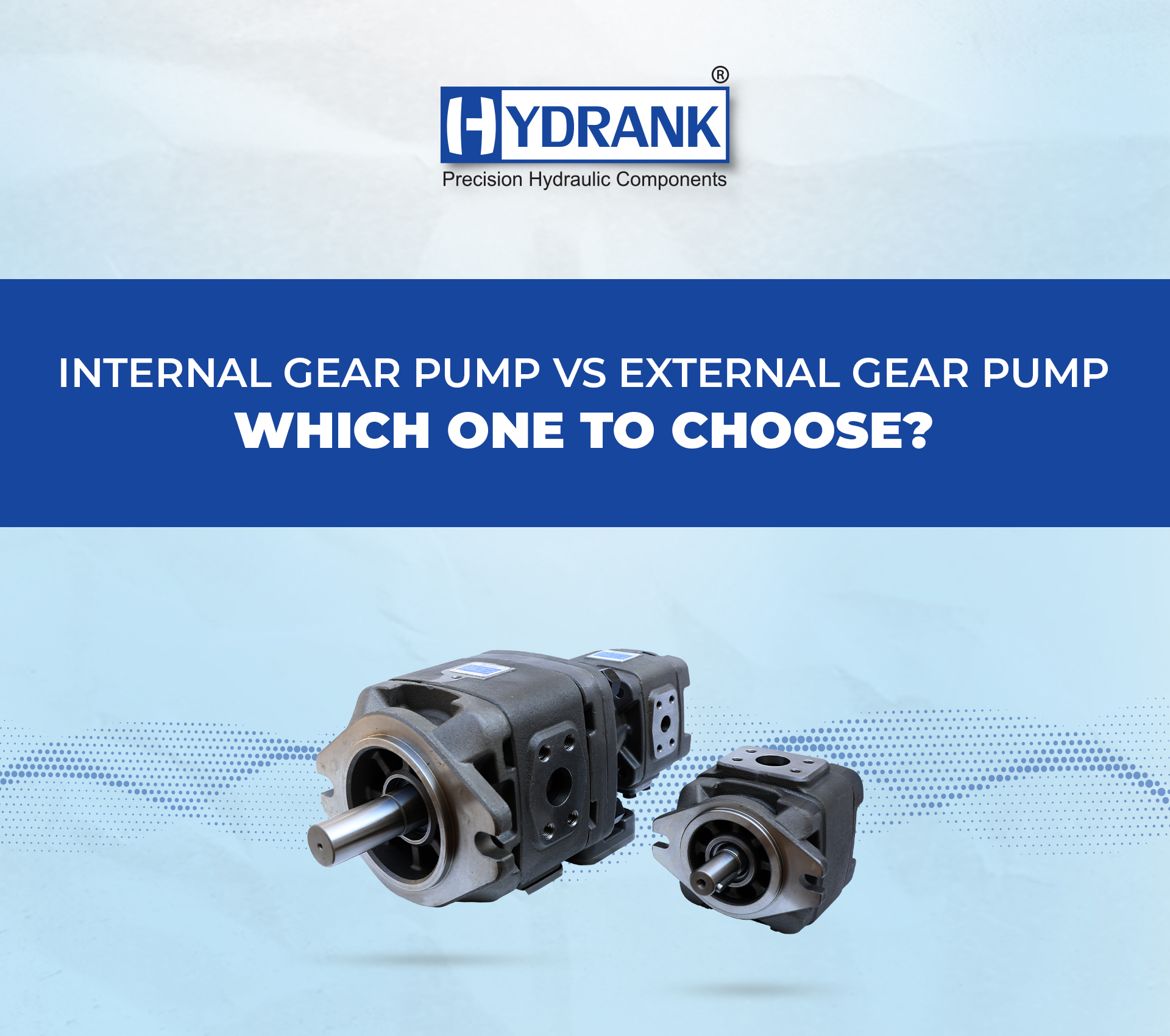
Choosing the right industrial gear pump is a design decision that directly affects system efficiency, noise levels, viscosity handling, heat generation, and long-term reliability. While both internal and external gear pumps belong to the same positive-displacement family, their internal geometries and performance characteristics differ significantly. Understanding these differences is essential for selecting the best gear pump for industry applications.
At Shriank, we engineer and supply both internal and external gear pump configurations, allowing our customers to choose a pump based on performance requirements rather than generic assumptions. Below is a technical breakdown of how the two designs differ and when each one is the correct choice.
Working Principle: The Fundamental Difference
Choosing the right industrial gear pump is a design decision that directly affects system efficiency, noise levels, viscosity handling, heat generation, and long-term reliability. While both internal and external gear pumps belong to the same positive-displacement family, theirInternal Gear Pump
An internal gear pump uses two meshing gears of different sizes:
- An inner (driving) gear
- An outer (driven) gear
These gears rotate eccentrically, creating expanding and contracting chambers that draw in and discharge fluid smoothly. A crescent-shaped separator maintains chamber integrity, contributing to quiet, pulse-free operation.
External Gear Pump
An external gear pump uses two identical gears meshing side-by-side. As they rotate, fluid is trapped in the gear tooth cavities and carried around the outer periphery to the discharge port.
The operation is simple but more pulsation-prone than the internal design.
Flow Characteristics and Smoothness
Internal Gear Pump
- Produces exceptionally smooth, low-pulsation flow.
- Ideal for metering, blending, lubrication, and shear-sensitive fluids.
- Maintains flow stability even at very low speeds.
This makes internal gear pumps well-suited for industries requiring controlled, steady flow, which is why many customers rely on Shriank internal gear pump solutions for precise fluid handling.
External Gear Pump
- Flow ripple is higher due to sharp tooth engagement.
- Better suited for applications where fine metering is not the priority.
- Runs efficiently at medium to high speeds.
Pressure and Efficiency Performance
External gear pumps typically handle higher pressures, but internal gear pumps excel in maintaining efficiency across a range of viscosities.
Internal Gear Pump
- Retains high volumetric efficiency with thin or highly viscous fluids.
- Maintains efficiency even as internal wear progresses due to a self-compensating design.
- Inherently lower leakage because of the long sealing path.
External Gear Pump
- Optimized for medium to high pressure (up to 300+ bar depending on design).
- Efficiency drops faster when handling very viscous or abrasive fluids.
- Leakage paths are shorter, making wear more noticeable on performance.
Noise, Vibration, and Operating Smoothness
If your application requires quiet operation, the difference is substantial.
Internal Gear Pump
- Runs significantly quieter due to gradual gear engagement.
- Minimal vibration, ideal for test benches, indoor machinery, and continuous-duty operations.
External Gear Pump
- Produces higher noise because of sudden tooth engagement.
- Acceptable in outdoor or rugged applications where noise is less critical.
At Shriank, we often recommend internal gear solutions for customers needing low-noise operation, especially in process industries.
Fluid Compatibility and Viscosity Range
Internal Gear Pump
Handles a far wider viscosity range, from thin solvents to heavy oils.
Applications include:- Polymer transfer
- Lubrication systems
- Chemical dosing
- Food-grade syrup or resin pumping
Its ability to handle variable viscosities without redesign is one of the reasons it’s considered one of the best gear pumps for industry environments where process fluid flexibility matters.
External Gear Pump
Optimized for:
- Hydraulic oils
- Fuels
- Coolants
- General industrial fluids
Best suited for low- to medium-viscosity fluids with consistent temperature.
Maintenance Requirements and Serviceability
Internal Gear Pump
- Longer service intervals due to reduced wear.
- Slower internal contact reduces abrasion.
- Typically features modular construction for fast rebuilding.
Shriank’s internal gear pumps are designed with replaceable components and easy-access service layouts, reducing downtime during scheduled maintenance.
External Gear Pump
- Simple design allows quick replacement.
- However, wear on teeth and side plates is more rapid under abrasive or viscous conditions.
- Not ideal for applications with contaminants or high particulate levels.
Cost and Lifecycle Economics
Internal Gear Pump
Higher purchase price but lower lifecycle cost due to:
- Longer operational life
- Lower energy consumption
- Reduced maintenance
- Higher efficiency with variable viscosities
External Gear Pump
Lower upfront cost, but may require:
- More frequent replacement
- Higher noise management
- Greater energy consumption depending on system design
From a long-term value perspective, internal gear pumps often prove more economical in demanding or variable-load applications.
Application-Based Recommendation (Shriank Perspective)
Choose an Internal Gear Pump when:
- Your process involves high-viscosity fluids or variable fluid types.
- Smooth, consistent flow is critical.
- You require low noise and steady pressure output.
- The pump will operate continuously or at low speeds.
Choose an External Gear Pump when:
- You need compact, cost-efficient hydraulic power.
- The system runs at higher speeds.
- Fluid viscosity is stable and within a moderate range.
- Pressure demand is high, but flow smoothness is not critical.
Because we engineer both internal and external gear technologies, we advise customers based strictly on performance suitability, not product bias.
Conclusion – Select the Pump That Matches Your System, Not the Specification Sheet
Choosing between an internal and an external gear pump ultimately comes down to understanding your hydraulic system’s load profile, fluid properties, efficiency expectations, and environmental constraints.
At Shriank, we help industries make data-driven pump selections by analyzing:
- Pressure cycles
- Fluid characteristics
- Operating duty
- Heat behavior
- Maintenance intervals
The right pump is the one that maintains efficiency, safeguards equipment, and supports predictable operation, hour after hour, cycle after cycle.
If your system demands stable flow, wide viscosity tolerance, and long-term durability, an internal gear pump is the superior choice.
If your priority is compactness, simplicity, and high-speed performance, an external gear pump is often the better fit.Either way, Shriank ensures you receive a gear pump engineered for reliability, precision, and industrial performance.
India's Largest Hydraulic Vane Pump Supplier
contact us: +91 98980 09148

Subscribe to E-Mail Newsletters and Alerts
 submit

Delivery
Prompt and accurate delivery

Client Servicing
Pro after-sales customer support

Quality assurance
Top quality standards

Export
More then 10 countries