-
How to Choose the Right Voith Internal Gear Pump for Your Application
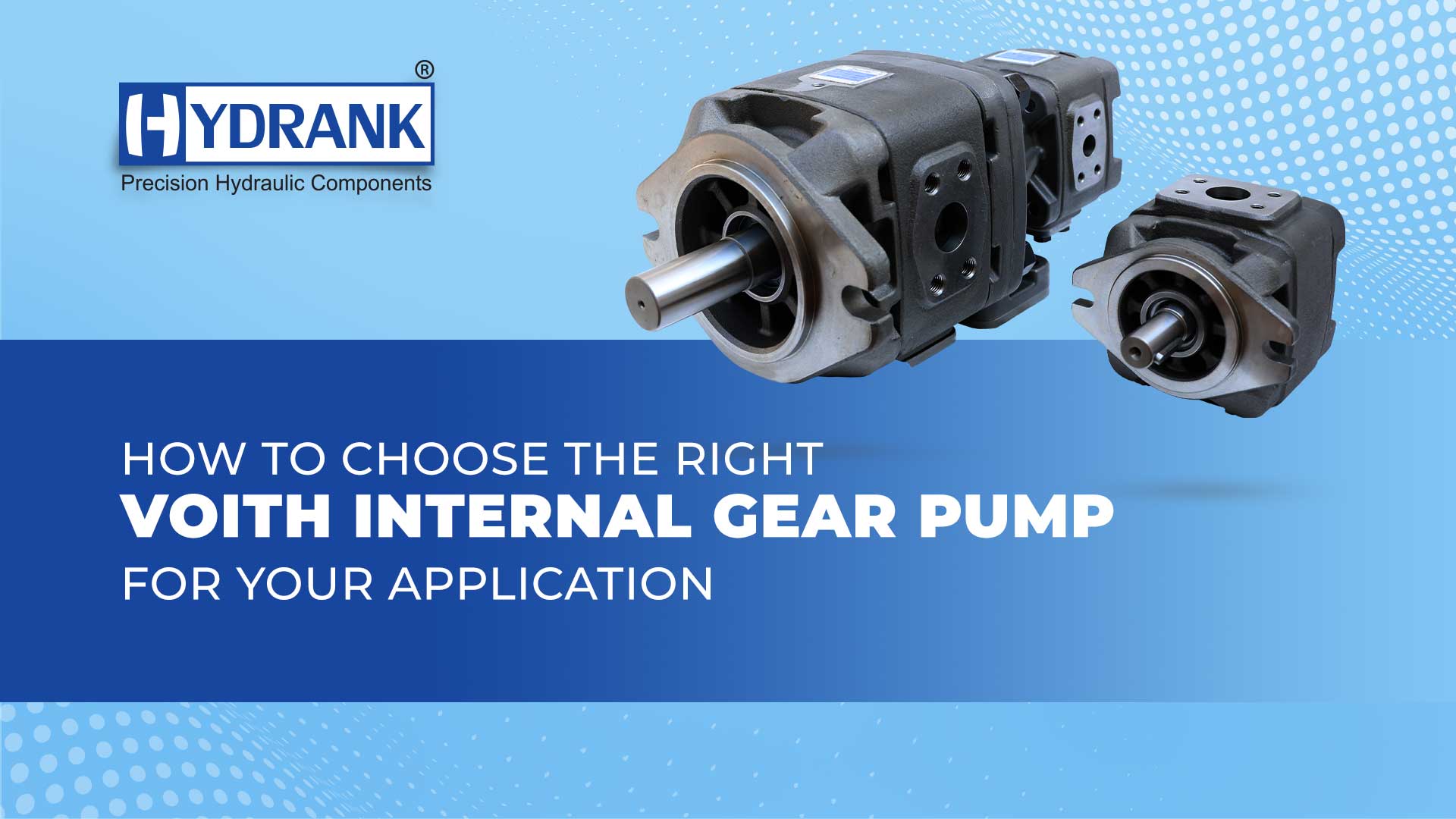
Selecting the correct pump for a hydraulic system is rarely about choosing the biggest or most powerful option. In many industrial applications, the right choice depends on stability, efficiency, and the ability to maintain performance under changing loads. This is why the Voith internal gear pump is widely used in demanding hydraulic systems where smooth flow, low noise, and long service life are required.
However, not every application needs the same configuration. Choosing the right hydraulic internal gear pump requires understanding operating pressure, flow demand, duty cycle, and system design. When these factors are evaluated correctly, internal gear pumps provide reliable performance even in heavy-duty environments.
This guide explains how to select the right Voith gear pump based on real operating conditions rather than catalog specifications alone.
Understanding the Role of an Internal Gear Pump in Hydraulic Systems
An internal gear pump works differently from external gear or piston pumps. Instead of two identical gears, the design uses an inner drive gear and an outer driven gear rotating eccentrically. This creates expanding and contracting chambers that move fluid smoothly from inlet to outlet.
Because of this design, a Voith internal gear pump offers:
- Very stable flow with minimal pulsation
- Low noise compared to other pump types
- High efficiency across a wide speed range
- Good performance with varying oil viscosity
Step 1 – Define Operating Pressure Before Selecting Size
The first step in selecting any heavy-duty gear pump is understanding the actual pressure range of the system, not just the nominal value.
Internal gear pumps are commonly used in medium- to high-pressure applications, but running close to the maximum rating continuously can reduce service life. A pump should be selected so that normal operating pressure remains below the maximum allowable limit.
When evaluating pressure requirements, consider:
- Continuous working pressure
- Peak pressure during load changes
- Pressure spikes during startup or stopping
- Relief valve setting in the circuit
Step 2 – Match Flow Requirement to Actual System Demand
Flow determines how fast actuators move, but oversizing the pump does not improve performance. In fact, excessive flow often leads to heat generation, energy loss, and unstable operation.
For accurate pump selection, calculate flow based on:
- Cylinder or motor displacement
- Required cycle time
- Operating speed of the drive motor
- Expected efficiency losses
Step 3 – Consider Duty Cycle and Operating Conditions
Not all hydraulic systems run under the same conditions. Some operate continuously, while others run in short cycles with frequent load changes.
Internal gear pumps are commonly used in heavy-duty applications because they handle continuous operation well, but the duty cycle still affects pump selection.
Important factors include:
- Continuous vs intermittent operation
- Ambient temperature
- Oil temperature during operation
- Viscosity range of the hydraulic fluid
- Contamination level in the system
A pump that works perfectly in a clean, temperature-controlled environment may not perform the same in mobile or outdoor equipment.
Step 4 – Evaluate Noise, Stability, and Flow Smoothness
One of the main reasons engineers choose a Voith internal gear pump is its smooth operation. Compared to external gear pumps, internal gear designs produce less pulsation and lower noise.
This becomes important in:
- Machine tools
- Injection molding machines
- Test benches
- Press systems
- Indoor industrial equipment
In these applications, stable flow improves accuracy and reduces vibration in the system.
Step 5 – Check Compatibility with Existing Hydraulic Circuit
When replacing or upgrading a pump, compatibility with the existing system is critical.
Before selecting a new pump, verify:
- Mounting dimensions
- Shaft type and rotation direction
- Port sizes and location
- Pressure control settings
- Drive motor speed
Step 6 – Choose a Pump Designed for Long Service Life
Internal gear pumps are often selected for reliability, but durability depends on build quality and correct application.
A high-quality hydraulic internal gear pump should offer:
- Precision-machined gears and housing
- Stable bearing support
- Efficient sealing design
- Consistent performance under load
- Resistance to wear at high pressure
For heavy industrial use, material quality and manufacturing accuracy matter as much as design.
At Shriank, Voith-type internal gear pumps are selected and supplied based on actual operating conditions, not just catalog ratings. Matching the pump to the system ensures stable performance, lower maintenance, and longer service life in demanding hydraulic applications.
Step 7 – Understand Typical Voith Gear Pump Applications
Internal gear pumps are widely used in systems where smooth flow and reliable pressure control are required.
Common applications include:
- Injection molding machines
- Hydraulic presses
- Steel and rolling mills
- Marine hydraulic systems
- Mobile construction equipment
- Industrial power units
In these environments, the pump must operate under load for long periods without losing efficiency. This is why internal gear pumps are often chosen over other designs for heavy-duty hydraulic systems.
Conclusion
Choosing the right Voith internal gear pump is not only about pressure and flow numbers. The correct selection depends on how the system actually operates, load changes, duty cycle, temperature, and required stability, all of which matter.
A properly selected heavy-duty gear pump will run smoothly, maintain efficiency, and last longer with less maintenance. A poorly selected pump may work at first, but it will cause noise, heat, and premature wear.
By evaluating real operating conditions and selecting the pump accordingly, hydraulic systems can achieve reliable performance even in the most demanding applications.
At Shriank, pump selection is based on application understanding, ensuring that every internal gear pump supplied is suited to the system it will run in.
India's Largest Hydraulic Vane Pump Supplier
contact us: +91 98980 09148

Subscribe to E-Mail Newsletters and Alerts
 submit

Delivery
Prompt and accurate delivery

Client Servicing
Pro after-sales customer support

Quality assurance
Top quality standards

Export
More then 10 countries