-
What is a High-Pressure Pump? Types, Applications, & Selection Tips
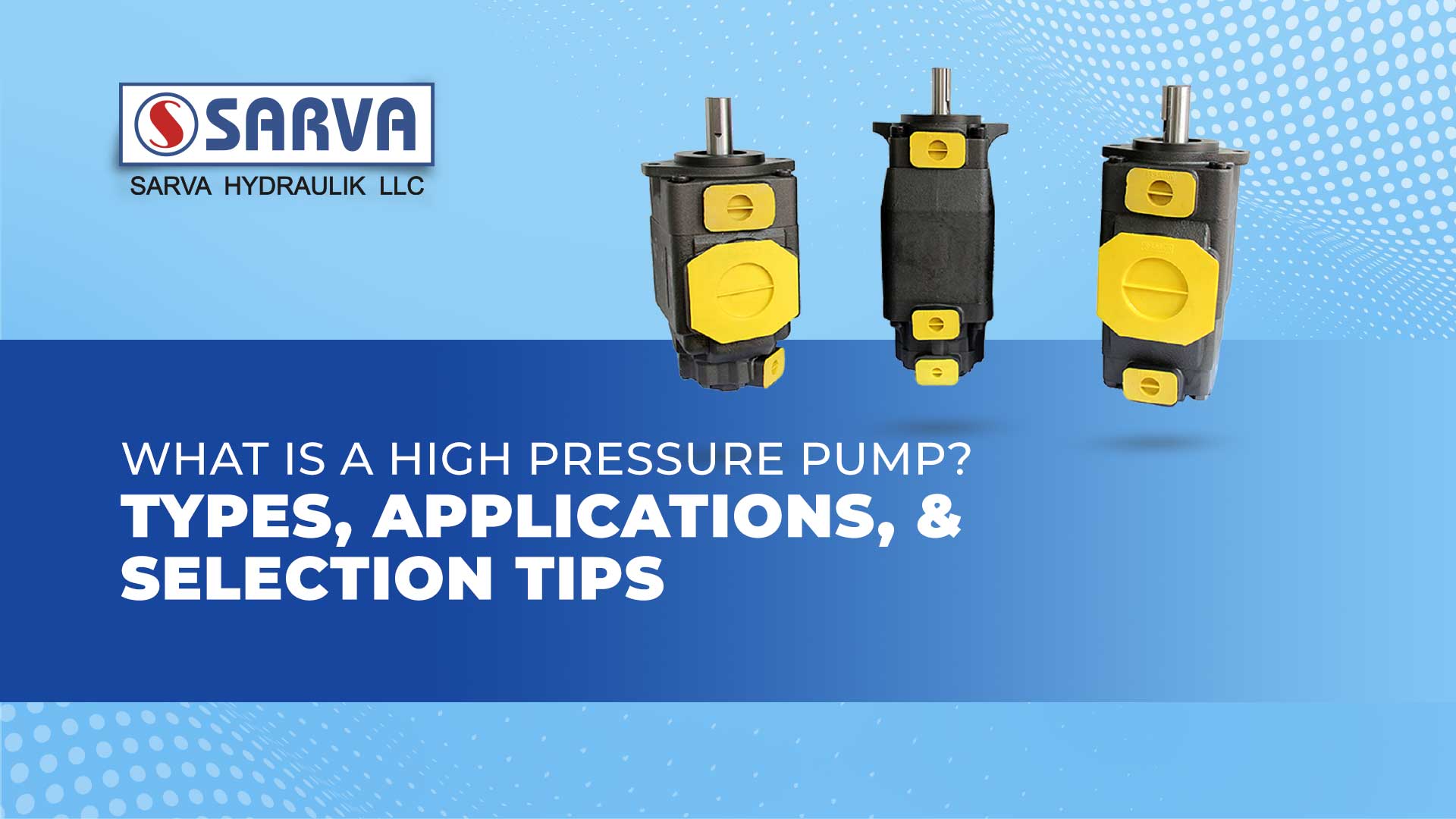
In hydraulic and industrial systems, pressure is what allows fluid power to perform heavy work efficiently. But not every pump is designed to operate under extreme pressure conditions. Applications such as hydraulic presses, injection molding machines, steel processing equipment, and mobile machinery require pumps capable of handling high loads continuously without losing efficiency or stability. This is where a high-pressure pump becomes essential.
A high-pressure pump is not simply a standard pump operating at a higher setting. It is specifically engineered to withstand elevated pressure conditions while maintaining flow stability, internal sealing, and mechanical reliability over long operating cycles.
Understanding the different pump types, their applications, and the right selection approach is critical for achieving reliable hydraulic system performance.
What is a High-Pressure Pump?
A high-pressure pump is a pump designed to move fluid at pressures significantly higher than standard industrial pumping systems. In hydraulic applications, these pumps are commonly used where large forces must be generated within compact systems.
Unlike low-pressure pumps that prioritize flow volume, high-pressure pumps are built to:
- Withstand elevated system pressure
- Maintain sealing efficiency under load
- Deliver stable flow during continuous operation
- Minimize internal leakage and heat generation
In hydraulic systems, pressure ratings often range from 210 bar to 350 bar or more, depending on the application.
The key challenge is not generating pressure once—it is maintaining reliable performance under repeated high-load conditions.
How a High-Pressure Hydraulic Pump Works
A high-pressure hydraulic pump converts mechanical energy into hydraulic energy by forcing fluid into the system under pressure.
The pump itself does not “create” pressure directly. Pressure develops when flow encounters resistance within the hydraulic circuit. High-pressure pumps are designed to tolerate this resistance safely without internal damage.
To achieve this, these pumps use:
- Precision-machined internal components
- High-strength housings
- Advanced sealing arrangements
- Balanced internal load distribution
The goal is to maintain efficiency and structural integrity even when operating near maximum pressure for extended periods.
Types of High-Pressure Pumps
Different applications require different pump designs. The most common types of high-pressure pumps used in industrial hydraulics include:
- Piston Pumps
Piston pumps are among the most widely used high-pressure hydraulic pumps in industrial systems.
They use reciprocating pistons to move fluid and are known for:
- Very high-pressure capability
- Excellent efficiency
- Precise flow control
These pumps are commonly used in:
- Heavy industrial machinery
- Hydraulic presses
- Construction equipment
- Mobile hydraulics
Variable displacement piston pumps are especially effective in systems with fluctuating pressure demands.
- Internal Gear Pumps
Internal gear pumps are preferred where smooth flow and stable pressure are important.
They operate using an inner and outer gear arrangement that creates continuous fluid movement with minimal pulsation.
Advantages include:
- Low noise operation
- Stable flow output
- Good performance with varying oil viscosities
These pumps are commonly used in:
- Injection molding machines
- Industrial power units
- Machine tools
In many cases, they serve as a reliable alternative where consistent pressure delivery matters more than extremely high flow rates.
- Vane Pumps
Vane pumps use sliding vanes rotating inside a cam ring to move fluid.
They offer:
- Smooth and quiet operation
- Good efficiency in medium- to high-pressure systems
- Compact design
Vane pumps are widely used in:
- Industrial hydraulic systems
- Material handling equipment
- Manufacturing machinery
- External Gear Pumps
External gear pumps are simpler in design and commonly used in medium-pressure applications. While not always suitable for extreme pressure conditions, heavy-duty versions can operate reliably in demanding environments.
Their advantages include:
- Compact construction
- Cost-effective operation
- Easy maintenance
Industrial High-Pressure Pump Applications
Modern hydraulic systems rely heavily on high-pressure pumps because they allow compact systems to generate significant force.
Typical industrial high-pressure pump applications include:
- Hydraulic presses
- Plastic injection molding machines
- Steel processing equipment
- Mobile construction machinery
- Agricultural equipment
- Mining systems
- Hydraulic power packs
In these applications, pressure stability is critical. A pump that cannot maintain consistent performance under load will affect productivity, accuracy, and equipment life.
Why Pressure Stability Matters
In high-pressure systems, instability creates more than performance issues—it creates mechanical stress.
Pressure fluctuations can lead to:
- Vibration in hydraulic lines
- Seal wear
- Excess heat generation
- Erratic actuator movement
- Premature component failure
A properly selected high pressure hydraulic pump maintains stable flow and pressure even under changing load conditions. This improves both system efficiency and long-term reliability.
How to Choose a High-Pressure Pump
Understanding how to choose high-pressure pump solutions requires evaluating more than pressure ratings alone.
Key factors include:
Operating Pressure
Determine both continuous and peak pressure requirements. A pump should operate comfortably below its maximum rating during normal conditions.
Flow Requirement
Flow rate determines actuator speed and system response. Oversized pumps increase heat and energy loss.
Duty Cycle
Continuous-duty systems require pumps designed for long operating hours without thermal instability.
Fluid Type and Viscosity
Oil viscosity affects lubrication, sealing, and internal efficiency.
System Environment
Temperature, contamination levels, and operating conditions influence pump life significantly.
Maintenance Accessibility
Ease of servicing and availability of spare parts affect long-term operating cost.
The best pump is not necessarily the highest-rated one—it is the pump best matched to the application.
Why Proper Pump Selection Matters
Many hydraulic problems originate from incorrect pump selection rather than component defects.
Common consequences include:
- Excessive heat generation
- Pressure instability
- Noise and vibration
- Reduced pump life
- Higher energy consumption
Selecting the right pump improves efficiency, reliability, and maintenance intervals across the entire hydraulic system.
Conclusion
A high-pressure pump is one of the most critical components in modern hydraulic systems. Whether using piston, vane, or gear pump technology, the goal remains the same: reliable pressure delivery under demanding operating conditions.
At Shriank, pump solutions are selected based on actual operating conditions, ensuring reliable performance across industrial and mobile hydraulic systems. With expertise across various types of high-pressure pumps, including vane pumps, internal gear pumps, and hydraulic pump systems, Shriank helps businesses improve efficiency, reduce maintenance issues, and achieve dependable hydraulic performance over the long term.
India's Largest Hydraulic Vane Pump Supplier
contact us: +91 98980 09148

Subscribe to E-Mail Newsletters and Alerts
 submit

Delivery
Prompt and accurate delivery

Client Servicing
Pro after-sales customer support

Quality assurance
Top quality standards

Export
More then 10 countries