-
Hydraulic Pump Types and Their Working Principles Explained
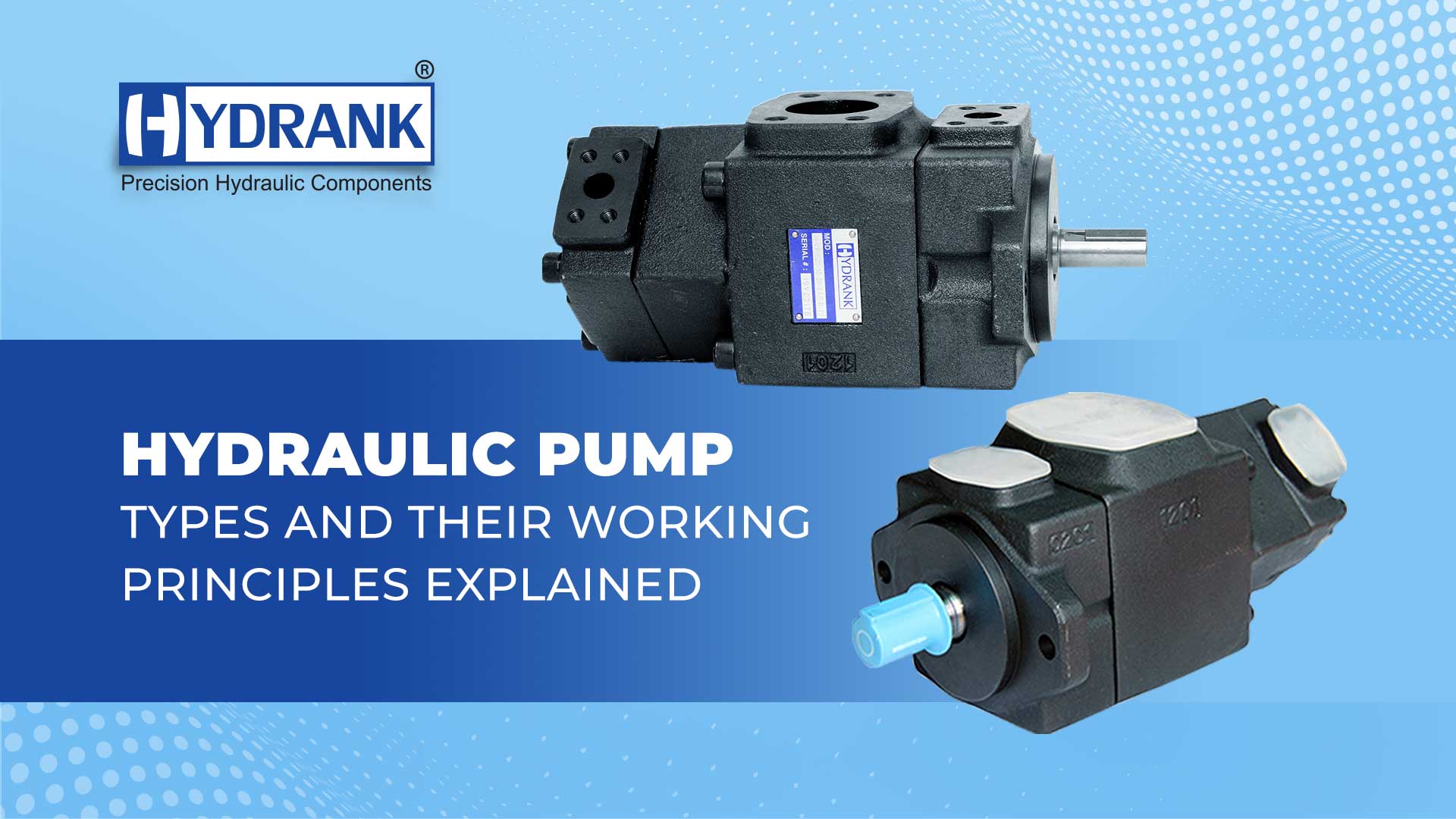
Hydraulic systems are used across industries to generate force, control motion, and power heavy machinery. At the center of every hydraulic system is the pump—the component responsible for moving hydraulic fluid through the circuit.
Understanding the Hydraulic Pump Working Principle is essential for selecting the right pump, improving performance, and maintaining system reliability. While different pump designs operate differently, they all perform the same fundamental function: converting mechanical energy into hydraulic energy.
Understanding the Hydraulic Pump Working Principle
One of the most common misconceptions in hydraulics is that pumps create pressure. In reality, pumps create flow. Pressure develops only when that flow encounters resistance within the hydraulic system.
The basic Hydraulic Pump Working Principle involves drawing fluid from a reservoir and delivering it into the hydraulic circuit. As the fluid meets resistance from cylinders, motors, or valves, pressure is generated.
The efficiency of this process depends on the type of pump, operating conditions, and system design.
Why Hydraulic Pumps Matter
Hydraulic pumps are among the most critical hydraulic equipment components because they directly influence:
- Flow delivery
- Pressure stability
- Energy consumption
- System performance
- Equipment reliability
Choosing the right pump is essential for achieving long-term system efficiency and reducing maintenance costs.
Gear Pumps: Simple and Cost-Effective
Gear pumps are one of the most widely used hydraulic pump types. They operate using rotating gears that trap fluid and move it from the inlet side to the outlet side.
Key Advantages
- Simple construction
- Compact design
- Easy maintenance
- Cost-effective operation
Gear pumps are commonly used in agricultural equipment, material handling systems, and industrial power units where reliability is more important than precision flow control.
Internal Gear Pumps: Smooth and Efficient
Internal gear pumps use an inner gear and an outer internally toothed gear to move fluid through the system.
Compared to conventional gear pumps, they offer:
- Smooth flow output
- Lower noise levels
- Reduced pressure pulsation
- High volumetric efficiency
Because of these advantages, internal gear pumps are widely used in machine tools, injection molding machines, and other industrial hydraulic solutions requiring stable hydraulic performance.
Vane Pumps: Balanced Performance
Vane pumps use a rotor fitted with sliding vanes that move within a cam ring. As the rotor rotates, fluid is trapped and transported through expanding and contracting chambers.
Benefits of Vane Pumps
- Quiet operation
- Stable flow characteristics
- Good efficiency under varying loads
- Compact design
Variable vane pumps can also adjust flow according to system demand, helping improve hydraulic system efficiency while reducing energy consumption.
They are commonly used in manufacturing equipment and hydraulic power packs.
Piston Pumps: High Pressure and Precision
Piston pumps are designed for demanding applications that require high pressure and accurate control.
These pumps use reciprocating pistons to move hydraulic fluid and are available in both fixed and variable displacement designs.
Advantages of Piston Pumps
- High-pressure capability
- Excellent efficiency
- Precise flow control
- Long service life
Piston pumps are frequently used in construction equipment, mining machinery, hydraulic presses, and heavy industrial systems.
Understanding Hydraulic Pressure Generation
Effective hydraulic pressure generation depends on both the pump and the system it operates within.
A pump continuously delivers flow, while pressure develops based on the resistance created by:
- Cylinders lifting loads
- Hydraulic motors produce torque
- Valves restricting flow
As resistance increases, pressure rises. This is why selecting the right pump and pressure-control components is essential for reliable system performance.
Choosing the Right Hydraulic Pump
Selecting the correct pump depends on several factors:
Operating Pressure
High-pressure applications often require piston or internal gear pumps.
Flow Requirements
Flow determines actuator speed and overall system responsiveness.
Duty Cycle
Continuous-duty systems need pumps designed for extended operation.
Efficiency Goals
Choosing an efficient pump helps reduce heat generation and energy consumption.
The right pump is not necessarily the most powerful one—it is the one that best matches the application’s operating conditions.
Why Pump Selection Impacts System Efficiency
Pump performance has a direct effect on hydraulic system efficiency. A properly matched pump helps:
- Reduce energy consumption
- Lower operating temperatures
- Improve system reliability
- Extend component life
- Minimize maintenance costs
Poor pump selection often results in heat generation, pressure instability, and unnecessary wear throughout the system.
Why Businesses Trust Shriank
At Shriank, hydraulic solutions are selected based on actual application requirements rather than generic specifications. Whether the requirement involves gear pumps, vane pumps, internal gear pumps, or high-pressure hydraulic systems, the focus remains on delivering reliable performance and long-term efficiency.
By helping customers choose the right hydraulic technologies, Shriank supports improved productivity, reduced downtime, and dependable hydraulic operation across industrial applications.
Conclusion
Understanding the Hydraulic Pump Working Principle helps engineers and businesses select the right pump for their hydraulic systems. From gear pumps and vane pumps to internal gear and piston pumps, each design offers unique advantages based on pressure, flow, and application requirements.
Choosing the right pump improves performance, efficiency, and reliability—ensuring hydraulic systems operate effectively for the long term. With the right application support from Shriank, businesses can maximize system performance while reducing operating and maintenance costs.
India's Largest Hydraulic Vane Pump Supplier
contact us: +91 98980 09148

Subscribe to E-Mail Newsletters and Alerts
 submit

Delivery
Prompt and accurate delivery

Client Servicing
Pro after-sales customer support

Quality assurance
Top quality standards

Export
More then 10 countries