-
Difference Between a Proportional Valve and a Directional Valve?
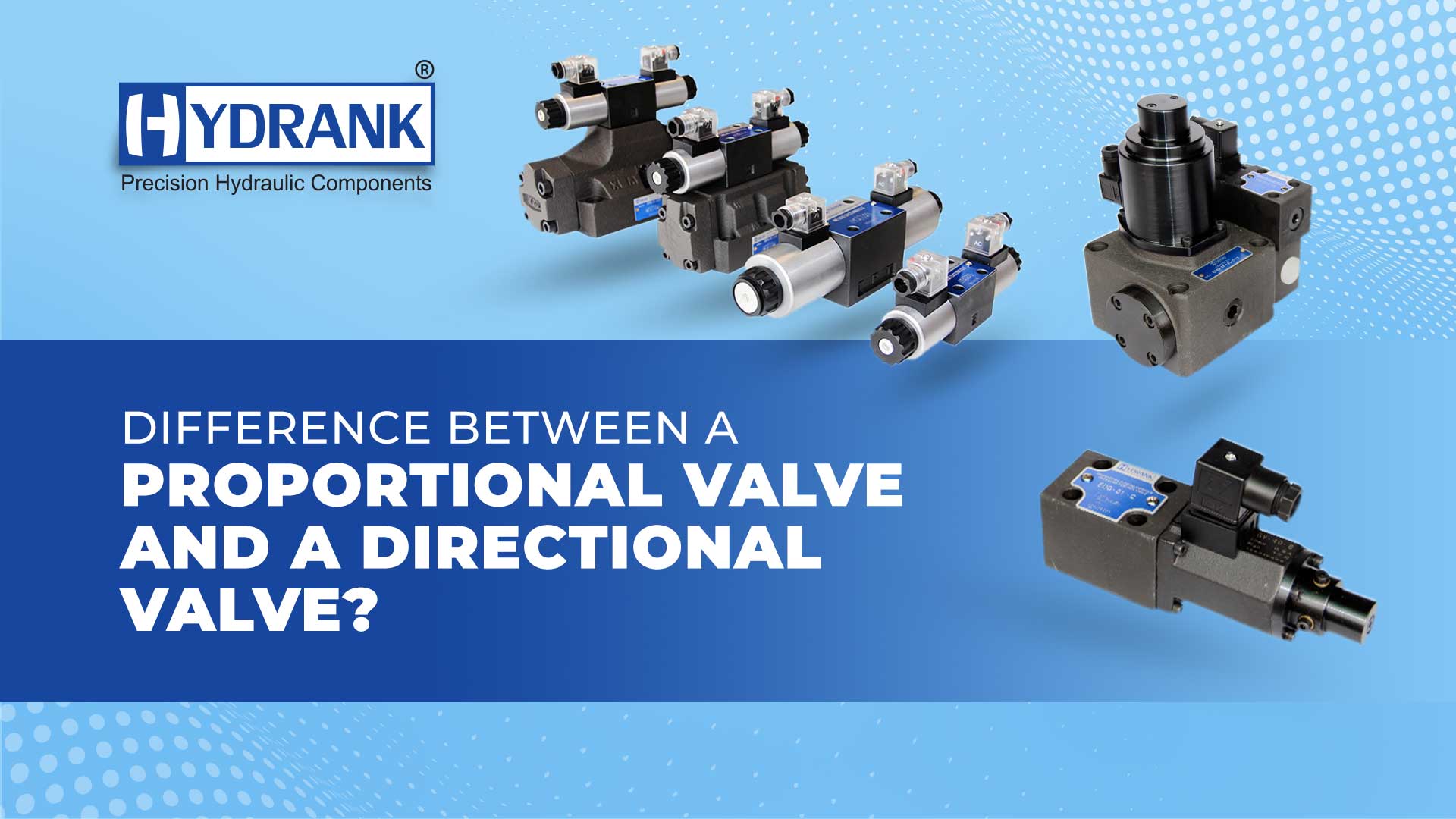
In heavy-duty industrial machinery, precision fluid power control determines whether a hydraulic system operates with smooth accuracy or suffers from sluggish movement, pressure surges, and mechanical wear. When plant engineers and maintenance heads design or upgrade hydraulic circuits, evaluating the difference between a proportional valve and a directional valve is critical to achieving the right balance of speed, force, and control logic.
At Shri Ank Enterprise, we offer a comprehensive range of industrial hydraulic components, including directional control valves and proportional valves. In this article, we will explain their working principles, key differences, applications, and how to choose the right valve for your hydraulic system.
1. Quick Technical Comparison: Proportional vs. Directional Valves
Feature Directional Control Valve (DCV) Proportional Valve Primary Function Directs, starts, or stops fluid flow paths. Continuously varies flow rate, pressure, or direction proportional to an input electrical signal. Control Logic Discrete / On-Off (Solenoid-actuated fixed positions). Infinite / Variable (Closed-loop or open-loop analog/PWM control). Response Precision Binary (All-or-nothing spool movement). Micro-adjustable (Controls spool displacement precisely down to micrometers). Industry Standards & Shri Ank Range 4WE6 (CETOP 3), 4WE10 (CETOP 5), DSG-01 / DSG-03 series.
EFBG Series (Proportional Pressure & Flow), EDG Series. Typical Applications Simple actuator extension, retraction, clamping, fluid routing. Injection molding, CNC machine tools, synchronized presses, smooth motion profiling. 2. What is a Directional Control Valve (DCV)?
A Directional Control Valve is engineered to control the path that hydraulic fluid takes within a circuit. By shifting an internal spool, a DCV opens, closes, or reroutes internal passages, dictating the exact direction in which a hydraulic cylinder or motor moves.
How It Works & Key Characteristics
Directional valves operate on a discrete (on/off or multi-position) switching logic. When energized via a solenoid coil—such as the widely deployed 4WE6 (CETOP 3 / NG 6) or 4WE10 (CETOP 5 / NG 10) series, or the reliable DSG series available at Shri Ank Enterprise—the spool moves instantly between fixed mechanical end-positions.
- Binary States: They function in fixed states (fully open, fully closed, or redirected) rather than modulating fluid volume incrementally mid-stroke.
- Rapid Response: Ideal for tasks requiring immediate, repetitive switching between feed and return strokes.
- Rugged Reliability: Built for harsh industrial environments with straightforward electrical wiring requirements, making them the foundational backbone of standard hydraulic circuits.
3. What is a Proportional Valve?
A Proportional Valve is an advanced hydraulic control device that bridges traditional fluid power with electronic micro-processing. Unlike standard DCVs that operate solely in binary states, a proportional valve regulates flow rate, pressure, or direction continuously in direct proportion to a variable electrical command signal (such as 0-10V, 4-20mA, or PWM).
How It Works & Key Characteristics
Proportional valves utilize specialized proportional solenoids featuring linear force characteristics. When the input current changes incrementally, the magnetic force shifts the spooling mechanism by precise fractional distances.
- Infinite Variable Control: By allowing the spool to stop at intermediate positions, proportional valves eliminate hydraulic shock (“water hammer”) by enabling smooth acceleration and deceleration ramps.
- Multi-Parameter Regulation: Units like the EFBG Series Proportional Pressure and Flow Control Valves or EDG Series Directly Operated Relief Valves can regulate system pressure and flow simultaneously with extreme repeatability.
- High System Efficiency: They deliver the exact fluid volume demanded by the active load rather than dumping excess flow over a standard relief valve, significantly reducing energy wastage in automated systems.
4. Key Differences: Deep Technical Breakdown for Engineers
A. Control Precision and Dynamics
- Directional Valves offer binary control. When a solenoid activates, the spool shifts completely from port A to port B. This causes sudden fluid redirection, which may require external flow control valves or accumulators to cushion shock.
- Proportional Valves provide infinite resolution. The spool position is continuously adjusted, permitting precise control over actuator velocity, force profile, and positioning accuracy.
B. System Complexity and Cost
- DCVs are cost-effective, easy to troubleshoot, and integrate directly with standard PLC digital output cards without complex feedback loops.
- Proportional Valves require specialized electronic amplifiers, PLC analog output cards, and strict adherence to oil cleanliness standards (such as ISO 16/14/11) to safeguard tight internal spool clearances from particulate wear.
C. Application Suitability
- Choose Directional Valves When: Your machinery requires standard sequencing, clamping, or cylinder actuation where exact mid-stroke speed modulation is unnecessary.
- Choose Proportional Valves When: You operate sophisticated machinery (such as injection molding machines, heavy hydraulic presses, or synchronized bending brakes) requiring multi-axis coordination, variable force regulation, and precise positioning.
Looking for the right hydraulic valve for your application?
Understanding the exact difference between proportional and directional valves ensures optimal machine performance, reduced downtime, and improved energy efficiency. While directional valves remain indispensable for basic hydraulic switching, proportional valves unlock advanced, computer-controlled precision for complex industrial automation.
As a trusted industrial partner since 1997, Shri Ank Enterprise provides a comprehensive inventory of top-tier hydraulic components—including Hydrank Vane Pumps, dependable Directional Control Valves (4WE6, 4WE10, DSG series), and advanced Proportional Valves (EFBG, EDG series). Whether you are upgrading an existing fluid power circuit or designing a new automated system, our engineering sales team is ready to assist you. Contact us today for expert guidance and custom hydraulic solutions.
India's Largest Hydraulic Vane Pump Supplier
contact us: +91 98980 09148

Subscribe to E-Mail Newsletters and Alerts
 submit

Delivery
Prompt and accurate delivery

Client Servicing
Pro after-sales customer support

Quality assurance
Top quality standards

Export
More then 10 countries