-
Tokimec Vane Pump: Understanding Displacement & Pressure
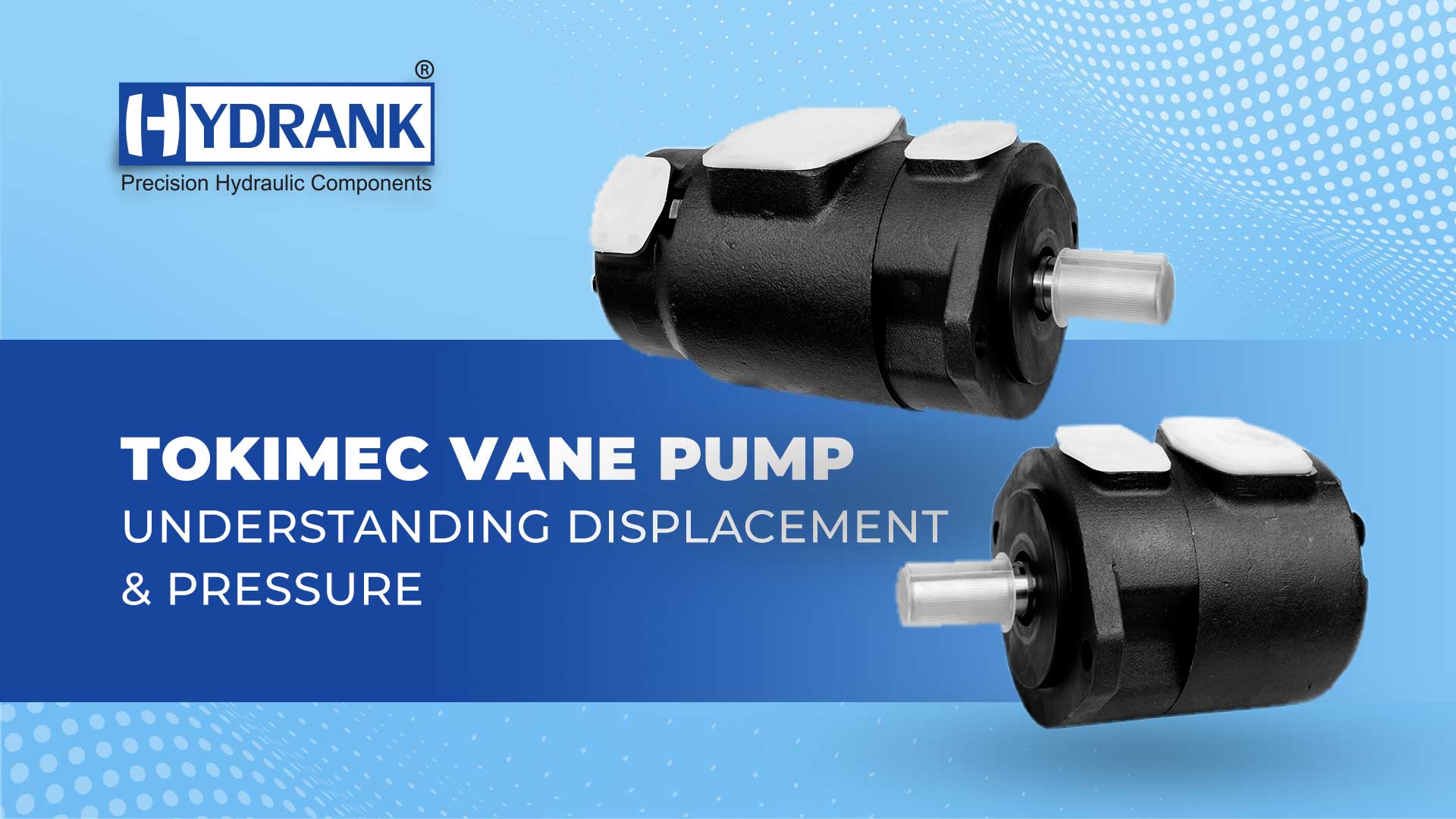
Selecting the right hydraulic pump requires understanding two important technical parameters: displacement and pressure. These factors influence how efficiently a hydraulic system operates, how much fluid it delivers, and whether it can handle demanding industrial applications.
A Tokimec vane pump is widely recognised for smooth fluid delivery, low-noise operation, and reliable hydraulic performance. At Shriank, we understand the importance of selecting compatible hydraulic components that meet specific operating requirements. Through our hydraulic pump solutions, we help businesses identify suitable replacements for industrial machinery.
Understanding Tokimec vane pump displacement and pressure ratings can help maintenance teams make informed decisions about pump selection, performance, and replacement.
What Is a Tokimec Vane Pump?
A Tokimec vane pump is a positive-displacement hydraulic pump designed to transfer hydraulic fluid through a rotating vane mechanism.
Tokimec, now operating under Tokyo Keiki, offers vane pump designs used in various industrial hydraulic applications. These pumps are valued for their relatively quiet operation, consistent flow characteristics, and dependable performance.
A Tokimec hydraulic pump may be used in manufacturing equipment, hydraulic presses, injection moulding machines, and other systems requiring controlled hydraulic power.
However, selecting the correct pump involves more than identifying the brand or series. Displacement, pressure rating, operating speed, and installation compatibility must also be considered.
Understanding the Vane Pump Working Principle
The vane pump working principle involves a rotor positioned inside a cam ring. The rotor contains sliding vanes that move outward and maintain contact with the surrounding ring.
As the rotor turns, spaces between the vanes expand and contract, creating the pumping action.
The process involves three stages:
- Suction: Expanding chambers draw hydraulic fluid into the pump.
- Fluid transfer: The rotating vanes carry fluid through the pump housing.
- Discharge: Contracting chambers push fluid towards the outlet.
This mechanism allows a hydraulic vane pump to deliver relatively smooth flow with reduced pulsation compared with certain other pump designs.
Actual performance depends on operating speed, internal clearances, fluid viscosity, and system conditions.
What Is Tokimec Vane Pump Displacement?
Vane pump displacement refers to the volume of hydraulic fluid a pump theoretically moves during one complete shaft revolution.
It is generally expressed in cubic centimetres per revolution (cm³/rev).
For example, a pump with a displacement of 50 cm³/rev operating at 1,500 RPM has a theoretical flow rate of 75 litres per minute.
However, actual output may be lower because of internal leakage and volumetric efficiency losses.
Understanding Tokimec vane pump displacement is important because it directly influences the flow available to hydraulic actuators.
Higher displacement generally produces greater flow at the same operating speed, while lower displacement provides less flow.
The appropriate displacement depends on the machine’s required operating speed, hydraulic circuit design, and application.
Understanding Tokimec Vane Pump Pressure
While displacement determines theoretical fluid delivery, pressure relates to the resistance encountered within the hydraulic circuit.
Tokimec vane pump pressure ratings indicate the operating pressure limits specified for a particular pump model.
A pump does not independently generate a fixed pressure. Instead, pressure develops when the hydraulic flow encounters resistance from the connected load.
The selected pump must therefore withstand the pressure demands of the application.
Important considerations include:
- Maximum working pressure
- Continuous operating pressure
- Peak pressure limitations
- Hydraulic fluid requirements
- Operating temperature
- Manufacturer-specified speed limits
Exceeding the recommended vane pump pressure can accelerate internal wear, increase leakage, and potentially damage pump components.
Pressure ratings vary between Tokimec models and series, making it essential to consult the appropriate technical specifications.
Displacement vs Pressure: Key Differences
Although displacement and pressure are closely connected, they describe different aspects of vane pump performance.
Parameter Displacement Pressure Definition Fluid volume moved per revolution Resistance-related hydraulic pressure Measurement cm³/rev Bar or MPa Primary influence Available flow Load-handling capability Depends on Pump geometry System load and resistance Selection importance Required actuator speed Required operating force Both parameters must be considered together when selecting a replacement pump.
A pump with sufficient displacement but an inadequate pressure rating may not be suitable for the application. Similarly, a pump with an appropriate pressure rating but insufficient displacement may deliver inadequate flow.
Common Hydraulic Vane Pump Applications
The combination of smooth flow delivery and relatively quiet operation makes vane pumps suitable for several industrial applications.
Common hydraulic vane pump applications include:
- Injection moulding machines: Supporting controlled hydraulic movements during production.
- Hydraulic presses: Supplying flow for pressing and forming operations.
- Machine tools: Supporting hydraulic clamping and movement.
- Die-casting equipment: Providing hydraulic power for demanding manufacturing processes.
- Industrial power units: Supplying fluid flow to hydraulic circuits.
Actual suitability depends on the pump series, operating conditions, and application requirements.
Choosing a Tokimec Replacement Vane Pump
When an existing pump becomes worn or inefficient, selecting a compatible Tokimec replacement vane pump requires careful technical evaluation.
Maintenance teams should verify displacement, pressure rating, operating speed, mounting dimensions, shaft configuration, port arrangement, rotation direction, and hydraulic fluid compatibility.
The cause of the original pump failure should also be investigated. Contamination, suction restrictions, overheating, and incorrect operating conditions can damage a replacement if left unresolved.
Correct specification matching helps maintain reliable hydraulic operation and reduces the risk of unnecessary downtime.
Shriank Solutions for Tokimec Vane Pump Replacement
Shriank provides hydraulic pump replacement solutions for industrial applications, including its Hydrank range of Tokimec-compatible vane pumps.
Our approach focuses on identifying suitable replacement options according to the original pump specifications and operating requirements.
Whether businesses require assistance with displacement selection, pressure compatibility, or installation specifications, Shriank helps customers evaluate appropriate hydraulic pump solutions.
Conclusion
Understanding displacement and pressure is essential when selecting or replacing a Tokimec vane pump. Displacement influences available flow, while pressure ratings determine the operating conditions the pump can safely withstand.
For businesses seeking dependable hydraulic pump replacement solutions, Shriank offers technical product selection support and compatible pump options designed to meet industrial application requirements.
India's Largest Hydraulic Vane Pump Supplier
contact us: +91 98980 09148

Subscribe to E-Mail Newsletters and Alerts
 submit

Delivery
Prompt and accurate delivery

Client Servicing
Pro after-sales customer support

Quality assurance
Top quality standards

Export
More then 10 countries