-
Vane Pump vs. Internal Gear Pump: Which Is Better for Your Hydraulic Application?
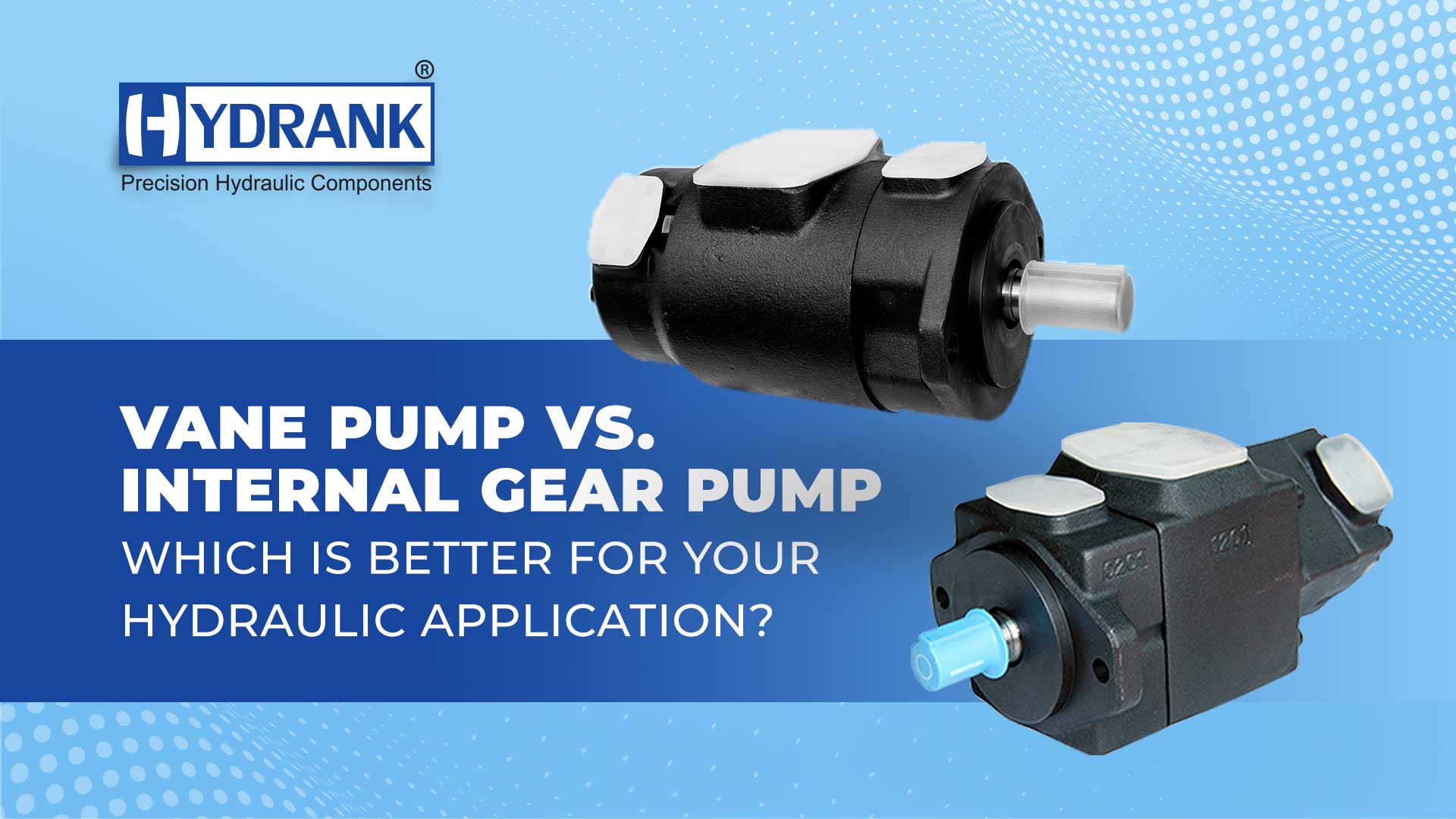
Choosing between a vane pump vs. internal gear pump comes down to four practical questions on your shop floor: how high your operating pressure goes, how thick your hydraulic oil is, how quiet the machine needs to run, and how fast your maintenance team wants to fix wear and tear.
If your circuit runs under 210 bar with standard hydraulic oil and you want quick, low-cost repairs using drop-in cartridge kits, a hydraulic vane pump is usually the smartest buy. If your machine runs continuously at 250 to 315 bar, uses a variable-speed servo drive, or demands whisper-quiet operation across shifting oil temperatures, an internal gear pump will outperform it.
At Shri Ank Enterprise, we spend every day helping OEM machine builders and plant maintenance heads across Ahmedabad, Delhi, Mumbai, and export markets troubleshoot pump failures and specify replacements. Most premature pump breakdowns we see aren’t manufacturing defects they happen because a vane pump was pushed into a low-RPM servo application, or an internal gear pump was bought where a simple replaceable-cartridge vane pump would have saved lakhs in downtime.
Here is an honest, engineering-first breakdown of how both pumps behave in real industrial conditions.
Side-by-Side Comparison: Vane Pump vs. Internal Gear Pump
Parameter Hydraulic Vane Pump Internal Gear Pump Continuous Pressure Standard: 140 – 210 bar Heavy-Duty (Sarva S7BS): Up to 350 bar
250 – 315 bar (Peak up to 350 bar) Noise Output Quiet (58 – 68 dBA) Extremely Quiet (52 – 62 dBA) Flow Ripple / Pulsation Very smooth flow Near-zero pulsation Oil Viscosity Window Narrow (Best at 15 – 100 cSt) Broad (Handles 10 – 1,000+ cSt easily) Volumetric Efficiency 85% – 92% 92% – 96% Oil Cleanliness Sensitivity High (Dirty oil scores the cam ring fast) Moderate On-Site Repairability Easy (Swap the cartridge kit in 20 mins) Harder (Usually requires full pump/gear replacement) Upfront Purchase Cost Lower to Mid-Range Mid to High-Range How a Hydraulic Vane Pump Works on the Shop Floor
Inside a vane pump, a slotted rotor spins off-center inside a hardened cam ring. As the shaft turns, centrifugal force – backed by oil pressure routed underneath the vanes – pushes rectangular vanes outward until their tips ride smoothly against the cam ring wall. Oil gets pulled into the widening pockets on the suction side and squeezed out cleanly as those pockets shrink near the discharge port.
Where Vane Pumps Shine
- 20-Minute Cartridge Overhauls: This is the biggest reason maintenance engineers love vane pumps. On models like our Hydrank HVP/H6 series or Eaton Vickers V/VQ replacements, the rotor, vanes, cam ring, and side plates sit inside one self-contained cartridge. When efficiency drops after years of service, your technician doesn’t need to unbolt the pump from the motor bell housing just pull the back cover, slide out the old cartridge, drop in a new one, and restart the line.
- Steady, Low-Ripple Flow: A 10-vane or 12-vane rotor delivers smooth, consistent oil flow. Downstream proportional valves and pressure transmitters last longer because they aren’t getting hammered by pressure spikes.
- Easy Multi-Pump Staging: Double and triple vane pumps (such as the Tokimec H-SQP432 or Denison T6DCC configurations) let you run a high-flow circuit for fast cylinder approach and a separate high-pressure circuit for clamping all off a single electric motor shaft.
Where Vane Pumps Struggle
- Cold Starts & Thick Oil: Because vanes rely on centrifugal force and hydraulic push to stay pressed against the cam ring, thick, cold oil during winter morning startups can make the vanes stick or lag. That leads to brief cavitation and micro-pitting on the cam track.
- Contaminated Oil: If your return-line filtration is neglected, fine metal or dust particles get trapped between the vane tips and the cam ring, scoring the internal track rapidly.
How an Internal Gear Pump Works (And Why Servo Machines Love It)
An internal gear pump uses a small inner pinion gear driving a larger outer ring gear in the same direction, with a fixed crescent-shaped divider sitting between them. As the gear teeth separate near the inlet, oil fills the tooth spaces, travels smoothly along both sides of the crescent, and gets pushed out as the teeth mesh back together at the outlet.
Where Internal Gear Pumps Shine
- Unmatched Low-Noise Performance: External gear pumps whine because their teeth slam together abruptly. Internal gear pumps mesh gradually over a long arc, keeping sound levels around 52–62 dBA. Even when running at 280 bar inside a closed factory hall, you barely hear them over the electric motor fan.
- High Efficiency at Low RPMs: Modern injection molding machines and hydraulic press brakes increasingly use servo-driven power packs that slow the motor down to 200–400 RPM while holding pressure. A vane pump loses centrifugal vane-sealing force at those low speeds, causing internal oil slip and heat buildup. An internal gear pump like our Hydrank HG0/HG1/HG2 or Voith and Eckerle replacements uses axial and radial pressure-compensation plates that tighten internal clearances as pressure rises, keeping volumetric efficiency above 92% even at low speeds.
- Forgiving with Viscosity Changes: Whether you are running standard ISO VG 46 hydraulic oil or thicker lubricating fluids up to 1,000 cSt, internal gear pumps draw fluid smoothly without starving at the suction port.
Where Internal Gear Pumps Struggle
- Higher Initial Spend: Tight manufacturing tolerances on the crescent seal and pressure plates put internal gear pumps in a higher price bracket than standard single vane pumps.
- Costlier Repairs: You cannot simply drop a cheap cartridge kit into a worn internal gear pump. Once the housing or gear set wears past tolerance, you are usually looking at a full unit replacement.
4 Real-World Deciding Factors Before You Order
1. Your Actual Working Pressure (Not Just Peak Rating)
For years, the thumb rule in hydraulics was simple: stay below 210 bar for vane pumps, and switch to internal gear or piston pumps above 210 bar. That rule still applies if you are buying standard Yuken PV2R or Tokimec SQP series pumps. However, newer 12-vane heavy-duty designs have changed the game for instance, Sarva Hydraulik S6 and S7BS vane pumps are built specifically for 300 bar to 350 bar continuous service, giving you high-pressure capability without giving up vane pump serviceability.
2. Fixed-Speed Motor vs. Servo / VFD Drive
If your hydraulic power unit runs on a standard 1,450 RPM induction motor with unloading valves, a vane pump gives you the best return per rupee spent. If you are building or upgrading to an energy-saving servo-hydraulic system, go straight for an internal gear pump.
3. Shop-Floor Noise Limits
If your machine sits next to operators on an assembly line such as a small C-frame press, shoe-molding machine, or indoor baler, an internal gear pump cuts operator fatigue noticeably compared to almost any other pump design.
4. Spare Parts Availability & Maintenance Culture
In plants where oil filtration is strictly monitored and downtime is expensive, both pumps run trouble-free for years. In rough industrial environments where oil changes get delayed, keeping a few spare vane pump cartridges on the shelf is much easier on the maintenance budget than stocking full internal gear pump assemblies.
Quick Application Matching Guide
Pick a Hydraulic Vane Pump if you run:
- Standard hydraulic power packs operating between 70 bar and 210 bar
- Conventional plastic injection molding and blow molding machines
- Die-casting machines needing double or triple pump flow combinations
- CNC machine tools, broaching machines, and clamping fixtures
- Systems where existing mounting flanges match Eaton Vickers, Yuken, Denison, or Tokimec standards
Pick an Internal Gear Pump if you run:
- Servo-driven injection molding machines and CNC hydraulic press brakes
- High-pressure baling presses, scrap compactors, and shearing machines (250–315 bar)
- Indoor factory equipment with strict low-decibel requirements
- Circuits handling high-viscosity fluids or wide ambient temperature swings
- Machines requiring drop-in replacements for Voith, Eckerle, or Sumitomo pumps
Need Help Matching a Pump to Your Circuit?
Whether you are replacing a worn-out OEM pump on an existing machine or sizing a fresh hydraulic power unit from scratch, getting the shaft type, mounting flange, port orientation, and displacement right saves days of installation headaches.
Shri Ank Enterprise stocks both complete ranges ready for dispatch across India including Hydrank (HVP, H6, and HG series), high-pressure Sarva Hydraulik vane pumps (up to 350 bar), and direct OEM-interchangeable replacements for Eaton Vickers, Yuken, Tokimec, Denison, Voith, Eckerle, and Sumitomo.
Send your existing pump model code or required flow (LPM) and pressure (bar) details to sales@shriank.com or call our engineering desk at +91 98980 09148 for exact datasheet matching.
India's Largest Hydraulic Vane Pump Supplier
contact us: +91 98980 09148

Subscribe to E-Mail Newsletters and Alerts
 submit

Delivery
Prompt and accurate delivery

Client Servicing
Pro after-sales customer support

Quality assurance
Top quality standards

Export
More then 10 countries