-
Yuken PVR Vane Pump Noise, Overheating & Leakage: Diagnosis and Fix Guide
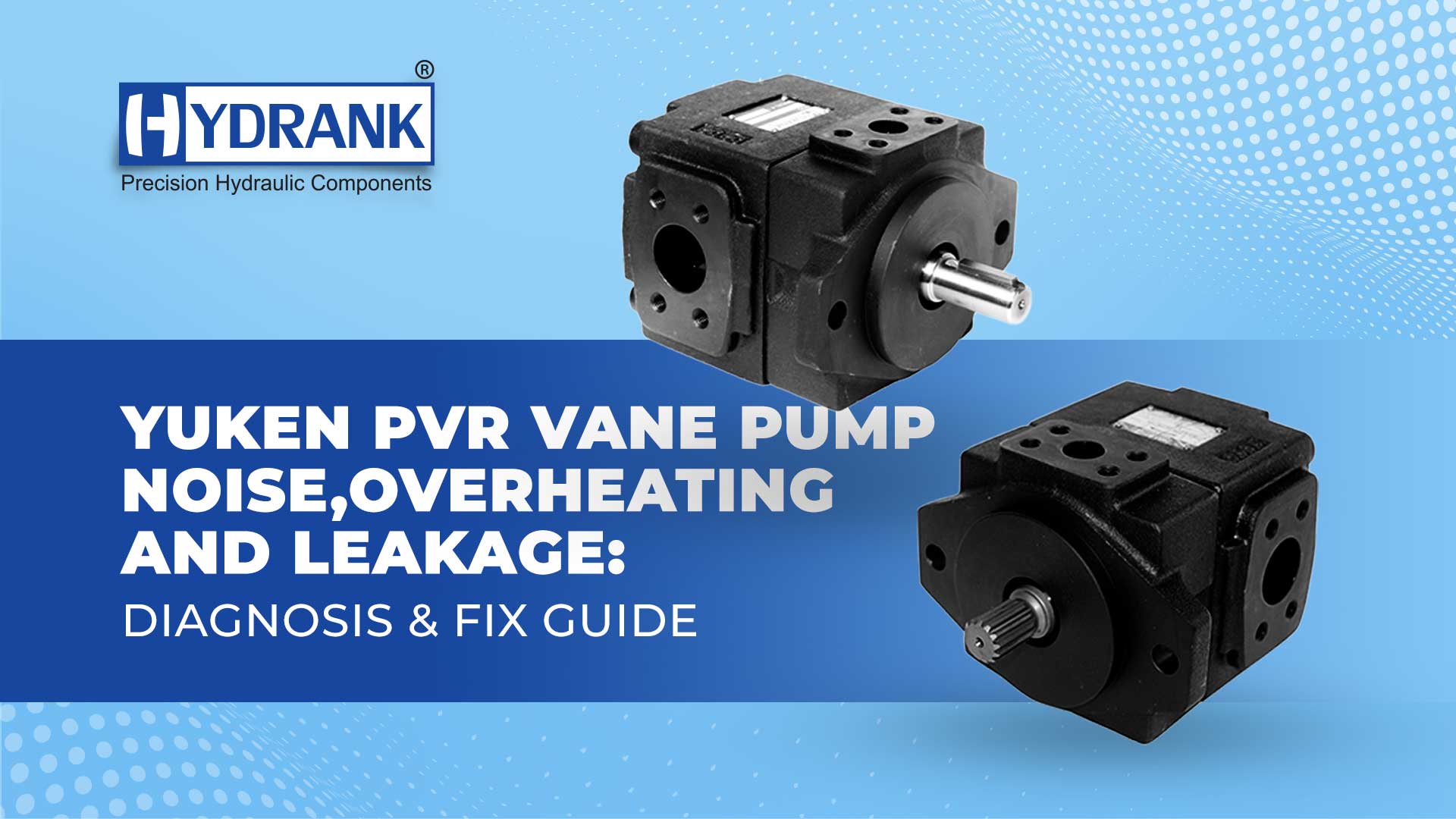
A hydraulic vane pump can deliver reliable performance for years when it is correctly selected, installed, and maintained. However, unusual noise, excessive heat, or oil leakage can indicate developing problems that should not be ignored.
For systems using a Yuken PVR Vane Pump, identifying the cause early can help prevent pump damage, hydraulic system downtime, and expensive repairs. This guide explains common symptoms, possible causes, and practical checks for Yuken PVR vane pump troubleshooting.
Understanding Common PVR Vane Pump Problems
The PVR series is a variable displacement vane pump used in hydraulic applications where controlled flow and pressure are required. Like other hydraulic components, its performance depends on correct oil condition, suction conditions, pressure settings, alignment, and operating temperature.
Three symptoms commonly reported by maintenance teams are:
- Excessive pump noise
- Overheating during operation
- Hydraulic oil leakage
These symptoms may occur independently, but they can also be related. For example, restricted suction can cause cavitation, resulting in Yuken vane pump noise, vibration, reduced performance, and eventually internal damage.
1. Yuken Vane Pump Noise: Causes and Diagnosis
A sudden increase in pump noise is one of the easiest warning signs to notice.
If a Yuken vane pump produces whining, rattling, or unusual vibration, start by checking the suction side of the hydraulic circuit.
Common causes include:
Low oil level: Insufficient hydraulic fluid can allow air to enter the suction line and cause abnormal operation.
Restricted suction line: A clogged filter, undersized hose, blocked inlet, or excessive suction resistance can starve the pump.
Air entering the system: Loose fittings, damaged seals, or cracks in the suction line can introduce air.
Incorrect oil viscosity: Hydraulic oil that is too thick or too thin for the operating conditions can affect pump performance.
Misalignment: Incorrect coupling alignment can transmit vibration into the pump and create mechanical noise.
Cavitation is particularly important to investigate. When the pump does not receive sufficient fluid at the inlet, vapor bubbles can form and collapse inside the pump. Continued cavitation can damage internal components and reduce vane pump efficiency.
2. Yuken Vane Pump Overheating
Hydraulic oil temperature that consistently rises beyond the recommended operating range should be investigated rather than treated as normal.
Yuken vane pump overheating can result from excessive pressure, internal leakage, poor cooling, incorrect oil viscosity, or inefficient operation.
Start by checking the following:
- System pressure and relief-valve settings
- Hydraulic oil level and condition
- Cooler or heat exchanger performance
- Filter condition
- Pump displacement and operating speed
- Internal leakage
- Ambient temperature and duty cycle
A pump that is forced to operate at unnecessarily high pressure can generate excess heat. Similarly, excessive internal leakage converts hydraulic energy into heat and can indicate wear in internal components.
Poor vane pump efficiency can therefore be both a cause and a symptom of overheating.
3. Yuken Vane Pump Leakage
Oil leakage should be classified as either external or internal.
External leakage
Visible oil around the pump shaft, housing, ports, or connections may indicate:
- Damaged shaft seals
- Worn O-rings
- Loose fittings
- Damaged sealing surfaces
- Excessive pressure
- Incorrect assembly
External leakage should be addressed quickly because hydraulic fluid loss can eventually affect system performance and create workplace safety and housekeeping concerns.
Internal leakage
Internal leakage is harder to identify because oil may not visibly escape from the pump. Instead, the hydraulic system may experience reduced pressure, slower actuator movement, increased oil temperature, or inconsistent performance.
Worn internal components can increase clearances and allow more fluid to bypass the intended pumping path. This reduces volumetric performance and can contribute to Yuken vane pump leakage and overheating.
A Practical Yuken PVR Vane Pump Troubleshooting Process
When diagnosing a pump problem, avoid replacing the pump immediately. A systematic inspection can determine whether the issue originates in the pump or elsewhere in the hydraulic circuit.
Step 1: Check the hydraulic oil.
Confirm the oil level, viscosity, cleanliness, and condition. Contaminated fluid can accelerate wear on precision hydraulic components.Step 2: Inspect the suction circuit.
Check the inlet hose, fittings, filter, tank level, and suction restrictions. Look for signs of air ingress.Step 3: Measure operating conditions.
Record pressure, temperature, flow, and pump speed. Compare actual readings with the machine’s required operating conditions.Step 4: Inspect for leakage.
Look for external leakage around seals and connections while considering symptoms that may indicate internal bypass.Step 5: Check alignment and installation.
Inspect the coupling, shaft alignment, mounting, and rotation direction.Step 6: Evaluate the pump itself.
If external causes have been eliminated, the pump may require inspection, testing, or PVR vane pump repair.When Does a PVR Vane Pump Need Repair or Replacement?
Not every hydraulic pump problem requires complete replacement. If the pump has experienced wear but its major components remain serviceable, professional inspection and repair may restore performance.
However, severe wear, damaged components, contamination-related scoring, or repeated performance problems may make replacement more economical.
A professional hydraulic service provider can test the pump, identify the failure mechanism, and determine whether repair or replacement is the more practical option.
How Shriank Can Help with Yuken PVR Vane Pump Requirements
When recurring noise, overheating, leakage, or loss of performance indicates that a pump needs professional attention, choosing the right hydraulic specialist becomes important. Shriank provides hydraulic pump solutions and technical support for industrial applications, helping businesses address pump performance, maintenance, repair, and replacement requirements.
For businesses dealing with Yuken PVR Vane Pump issues, Shriank can assist in evaluating operating requirements and identifying an appropriate solution based on the pump and hydraulic system specifications. This helps maintenance teams make an informed decision between PVR vane pump repair and replacement rather than replacing components without identifying the underlying cause.
With its experience in hydraulic pumps and industrial maintenance solutions, Shriank supports industries looking to minimise equipment downtime and maintain dependable hydraulic system performance. Businesses experiencing persistent hydraulic vane pump problems can consult Shriank for suitable pump solutions and technical assistance tailored to their application.
Preventing Hydraulic Vane Pump Problems
Preventive maintenance is often more cost-effective than waiting for a pump to fail.
Maintain the correct hydraulic oil level, monitor oil cleanliness, replace filters at appropriate intervals, inspect suction lines regularly, and track changes in noise, temperature, pressure, and system performance.
For equipment operating continuously or under high-pressure conditions, recording baseline operating parameters can make it easier to identify deterioration before a major failure occurs.
Conclusion
A structured troubleshooting process helps maintenance teams identify the actual source of hydraulic vane pump problems, protect system efficiency, and reduce unplanned downtime. For businesses requiring technical assistance, repair guidance, or a suitable hydraulic pump solution, Shriank offers industry-focused support to help maintain reliable and efficient hydraulic operations.
India's Largest Hydraulic Vane Pump Supplier
contact us: +91 98980 09148

Subscribe to E-Mail Newsletters and Alerts
 submit

Delivery
Prompt and accurate delivery

Client Servicing
Pro after-sales customer support

Quality assurance
Top quality standards

Export
More then 10 countries